Feeds:
Posts
Comments

Archive for the ‘Harness racing’ Category

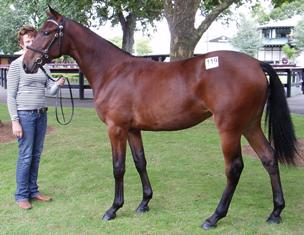
One of my ‘virtual stable’ of yearlings from the sales was Lot 119, Delia, American Ideal – Merrily Merrily (Life Sign) and I promised in my blog on my virtual stable to check if that American Ideal-Life Sign cross had been successful to date in North America. It gives a 3×3 to the very good mare Three Diamonds, and therefore plenty of other multiples including no less than 10 crosses to Adios across the Delia’s 6th, 7th and 8th generations!

And yes, American Ideal has been matched to Life Sign mares in America and according to the USTA crosses of gold information the result to date is 11 foals for 10 starters (91%) and 8 winners (73%) with 4 of those winning as 2yos; 5 of his starters have won in 1.55 and 2 of them have gained over $100k so far. 

These statistics may well have developed since Delia’s breeder Geoff Elton made his decision to double up to Three Diamonds, but they certainly reinforce the choice he made. Whether Delia herself will underscore it with performance is all in the future, of course, and there are other factors in the pot apart from pedigree – but I’ll keep an eye on her. And what an interesting platform she has herself as a future broodmare.

While ‘doubling up’ often focuses on sires and broodmare sires, it is less common (but pleasing) to see such a close up cross of a strong mare. With American Ideal showing up well as a sire, and with a small number but reasonable quality of Life Sign mares in New Zealand, this could be a match we see more of.

Another example of the American Ideal/Three Diamonds connection is the top (“world champion”) young filly American Jewel, who has won over $677,116 to date in North America. More of that story on theredmile.com website .  American Jewel’s damsire is Camluck, but her dam Trim Hanover is the great grand-daughter of Three Diamonds.

Delia’s dam Merrily Merrily has a maternal line which I am not at all familiar with – and I see it includes Thunder On an imported sire who is a son of Scotland out of Spinster. (Delia is Merrily Merrily’s  fifth foal – a half sister by Bettor’s Delight called Double Happy is running into a bit of form lately in the South Island.)

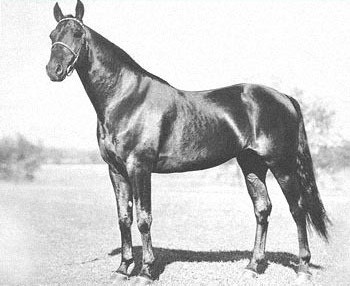
The following information about Three Diamonds is sourced from the harnessmuseum.com website

2010 Inductee – Three Diamonds
(1979-1995)

 A foal of 1979, Three Diamonds, p,3,1:53.1 ($735,759) was bred by Kentuckiana Farms and purchased by George Segal at the first Kentucky Standardbred Sale in 1980. Trained by Gene Riegle and driven by Bruce Riegle, Three Diamonds took victories in nine of her ten freshman year starts, including the Debutante Stake, the Sweetheart Consolation, the John Chapman Memorial and the Countess Adios, during which she set a world record for two-year-old pacing fillies of 1:56 . She closed the season with total earnings of $233,489 and the title of Two-Year-Old Pacing Filly of the Year.

Three Diamonds’s sophomore year was even more successful with sixteen wins out of twenty-one starts, fifteen of which were under
 
1:58. Her victories included the Jugette, the Mistletoe Shalee, the Tarport Hap, the Adioo Volo, and a division of the Bluegrass Stake, during which she set a world record for pacing fillies on a mile track of 1:53.1.

She amassed a total of $502,270, bringing her lifetime earnings to $735,759, and was named Three-Year-Old Pacing Filly of the Year. At the time of her retirement she held or shared world records on all three size tracks for three-year-old filly pacers, as well as having matched Niatross’ all-age-two-heat record of 3:47.3.

As a broodmare, she produced ten foals, including Life Sign p,3,1:50.3 ($1,912,454), the 1993 Little Brown Jug winner and sire of 2002 Horse of the Year Real Desire p,4,1:48.2 ($3,159,814). She is also the dam of Threefold p,3,1:51.1 ($634,004). Three Diamonds is the granddam of American Ideal p,3,1:47.4 ($786,055) and the great-granddam of Eternal Camnation p,5,1:49.2 ($3,748,574), the richest pacing mare in Standardbred history.

Three Diamonds passed away March 13, 1995 at Brittany Farms in Versailles , KY ; however, her daughters, granddaughters and great-granddaughters are among the most valued pacing mares in the breed today and they carry her influence forward.
Read Full Post »

I’ve had a closer look at the information sent by NZ Standardbred Breeders Assn on the new The Breeders “Golden Girls” Series.

This is an excellent initiative because it gives 4yo and older mares some real opportunities to get form, earn stakes and post decent times competing against a similar class of their own sex.

Kiely Buttell, executive manager for the NZSBA says she’s delighted at how clubs, HRNZ and others have come to the party and got the series up and running for this season. It’s a huge achievement given the structure of our industry!

Now it is up to trainers and owners to grab the opportunity and make it a success. It must be so frustrating when the calls for more like-against-like races are answered, only to struggle for nominations.

The great thing about this series is that it gives dates that trainers can plan for – and an aim for the latter part of the season which is a great way to keep owners interested. Owners will also get sufficient time for their mares to compete in the series and then let down ready for the breeding season – hopefully with a few more credentials. Fillies usually take longer to mature than the colts, and many are only showing their true worth at 4 or 5 years old. Although a series like this may delay the retirement-to-breed of some fillies at the end of their 3yo season, it will add to their value as broodmares in the longer term. It makes those 4yo and 5yo seasons more viable for owners who enjoy racing fillies and mares and are willing to give them time to mature.

The series spreads $217,500 in stakes across 27 races at shorter distances (from 1 mile, through 1700, 1950 and 2000 metres) and programmed from late May through to late July. The series is made up of 6 finals with regionally based heats – usually 3 heats but in some cases 4 heats. There are 3 series for 0-1 win mares and 3 series for 2-4 win mares. Only one of the series is in the North Island, however, and that’s for the 0-1 win mares with all heats at Cambridge.

This regional approach gives local clubs more involvement, and also recognises that transport costs away from your region can be a real disincentive when horses are only an outside chance to bring home a winner’s cheque. So it is a smart idea to run regional finals – ease the costs and spread the kudos around.

Being labelled a ‘Breeders’ series, I asked Kiely if there was going to be recognition for the original breeders of the competing mares, and the answer is ‘yes’ – in the final of each series, the first mare home that was bred by a member of the NZSBA will earn a ‘breeders bonus’ for that breeder. So that’s an incentive to join the NZSBA as well as encouraging support for the series overall!

This is a very positive response to the issue of maintaining the quantity and quality of our racing mares who then become our future broodmares.

Use it or lose it!

There’ll be details on the NZSBA website and HRNZ I’m sure, or contact your local club or Kiely Buttell at kiely.buttell@vodafone.co.nz for a leaflet.

Congratulations to all involved in this initiative.

Read Full Post »

As it turned out, my viewing of the yearlings was more erratic than previous years when I have made a point of viewing all of the parade. This time I saw most of the fillies but missed a large chunk of the colts in the middle section. So my picks are based on those I saw rather than the full catalogue.

I am still struggling to find time to ‘do the numbers’ but my impression was that there were some lovely types of fillies that went for a real bargain.  At the industry forum on the Sunday after the Karaka sales, the issue of keeping up our stock of racing and breeding fillies was well canvassed. John Mooney’s “Chairman’s Corner” in the March issue of Breeding Matters is well worth a read on this and other issues. For vendors of nicely bred fillies from very good sires but not outstandingly bred fillies from the hottest sires, the sale was mainly a pretty tough experience. Some of those breeders won’t be back. It raises alarm bells in terms of the future possibility of being able to pre-select sex of foals. Personally I am totally against this other than in exceptional circumstances (in the same way that I am not in favour of embryo transfer other than in exceptional circumstances).

I digress!

Here are my 4 selections of fillies and colts from the Karaka (Australasian Classic) Yearling Sale, using the pedigree pages and my own amateur observations on the day (no inspections).

Please give me yours! Add as “comment” to this blog.

Lot 122, Kamwood Courage, Courage Under Fire – Kamwood Lass (New York Motoring). Sold $11,000
If I’d had a spare $12,000 hanging around in my pocket I would have loved to take this one home. She stood out for me in the parade ring – not big, but good length of body and a lovely deep chest. She is a very nice speedy type and a full sister to a gelding and a filly who have both done well.

Lot 118,  Schleck, Muscle Mass – Merckx (Dream Vacation) (Sold $28,000)
A lovely athletic looking filly from a family that is full of natural talent. I really enjoy the Paynter approach to breeding, always looking ahead, tapping into European trends and contacts (will do more on this later).

Lot 74, Stolen Secret, Mach Three – Hot Secret (Beach Towel). (Buy back $25,000)
Good size, strong type. Is this a ‘golden cross’? Time and statistics will tell.

Lot 119

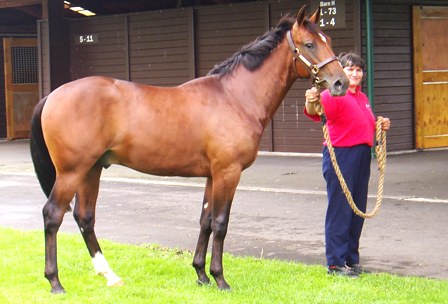
Lot 119 Delia with preparer Clare McGowan

Lot 119, Delia, American Ideal – Merrily Merrily (Life Sign). (Sold $7000)
I thought this was a very attractive , tall type, with a long barrel and good chest. She looked in the midst of a bit of growth spurt, but I like what I see of American Ideals on the racetrack and I like the double up of the excellent mare Three Diamonds (3×3) – it is good to see a breeder try something like this rather than the usual focus on double up of sires. I’ll have to check, but my recollection is the American Ideal has had some performers in America from Life Sign mares. Breeder Geoff Elton says he is a little disillusioned with the industry at the moment and has moved into other interests. He has quit this family now, and will probably not be selling at the sales next year. I hope this filly does really well and draws him back in! I won’t expect her to be a 2yo, she’s got growing to do.

The colts I’ve picked are:

Lot 25

Lot 25 Charlie Chuckles

Lot 25, Charlie Chuckles, Grinfromeartoear – Charioteer (Christian Cullen). (Sold $34,000) 
Nice strong type, looked great.  Nice pedigree match too.

Lot 19, Derringer, Bettor’s Delight – Bury My Heart (In The Pocket). (Sold $22,500)
The full brother to Texican but Cran Dalegety didn’t want him and the price is surprisingly light. Without having inspected him, the only downside I could spot was his size – he is a small, compact type, but not the “built like a brick shithouse” round, solid and strong type that Bettor’s Delight can stamp even if they are small. He looked to me more like a smaller In The Pocket type. However the family has plenty of class and I like the breeding – I’ll take my chances.

Lot 175, Crixus Brogden, Real Desire – Swift Mirage (What’s Next) (Sold $9,000)
Sold so cheap I must have missed something!! I’m just taking a punt on this guy because he paraded so well, looked so focused.

Lot 148

Lot 148 Destination Moon

Lot 148, Destination Moon, Grinfromeartoear – Zenterfold (In The Pocket) (Sold $67,000)
Call me biased, but… I’m very happy to have him in my “virtual stable”.

Read Full Post »

When I spoke to Nevele R Stud’s Peter O’Rourke  recently I was delighted to learn that Tintin In America has settled in very well at Nevele R and is relaxed and comfortable. The soreness in his leg is no worse and in fact a little better, and it has not affected collection of his semen at all. In fact Peter describes him as a ‘great little stallion” and his fertility rate for his first year standing as a sire will be around 90%, which is outstanding.

Tintin In America

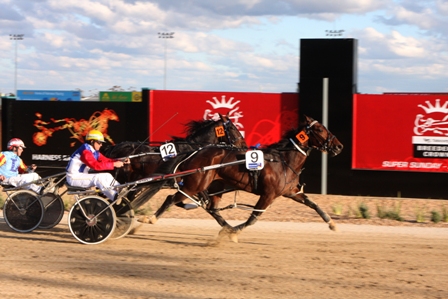
Tintin In America winning the 3yo Breeders Crown.

Tintin In America served 63 mares this season (40 in NZ and 23 in Australia), including about 15 on farm at Nevele R.

Although that is lower than Nevele R hoped, Peter says there are reasons for it – the overall numbers of mares being bred to continues to downward trend so there are basically fewer mares spread around a healthy number of sires, and the stud also had the herpes virus alert which contributed to fewer mares on farm than usual.

However the quality of the mares Tintin In America got in his first season was good – about 50% were winning mares, Peter says, which shows a level of confidence in the sire. When a new ‘young gun’ stands at stud at such a reasonable fee, there is always the risk that the majority of mares he gets will be less performed ones brought in from the ‘back paddock’ in the hope that a miracle may occur!  Although Tintin had exceptional speed, it is a big ask to upgrade mares unless they also bring something to the table, and many a new sire at the lower end of the stud fee spectrum has faced that problem.

As a 15.1h stallion with a reputation for speed and endurance (he won at the highest level from age 2 to 4) he will be attractive match for medium and larger mares. It will be interesting to see if he is one of those sires who ‘stamp’ their progeny in type or not.  A really important attribute he will hopefully pass on is his will power, which his dam Zenterfold also had as a racehorse – a desire to win, a really competitive streak, an arrogance. My own belief is that Tintin’s ability is driven from his maternal line, and my selection of sires is really to complement that with additional scope, and to ‘call’ to its best genes through pedigree matching.  That’s not downplaying McArdle’s contribution as a sire, but just from knowing the family well.

As the breeder of Tintin In America I remain very interested in his well being, and it was great to get an invitation from Peter to visit him whenever I am in Christchurch.

Post note: Re my previous blog, when just about to leave for the yearling sales – Tintin In America’s half brother Lot 148 Destination Moon sold for $67,000 at the Australasian Classic sale at Karaka on 8 May 2012. That’s a price I’m very pleased with, and he has gone to a good owner (Kerry Hoggard) and good trainer (Gareth Dixon).  As I said in my blog, a good price like that gives something back to the vendor but also leaves room for the new owner to add value and hopefully get a good return. I will be following his progress with interest. He certainly had the same energy and assertiveness that Tintin had. Fingers crossed for the same speed!

(Apologies for the lack of blogs post sale, for a number of reasons including family ill health and computer problems I have not been able to get to the blog for the past couple of weeks.)

Read Full Post »

I’ll come back to Bettor’s Delight later, because it is a fascinating topic for the future.

But right now, we are bang in the middle of the New Zealand standardbred yearling sales. Day One in Christchurch is over, and I’m adding those selling prices into my catalogue for future reference.

Harnesslink describes the sale so far in fairly favourable terms, with the average only just down on last year. But averages hide many a loss. As I go through the catalogue I can see many yearlings that would not be making a profit for the vendor – or a very marginal one depending on how much of the work you do yourself and how much you have to pay others.

Yes, real quality will always attract interest and money, and there are some prices that indicate there was maybe a fault in the individual that put bidders right off. Which sort of begs the question why some of that isn’t sorted out in the inspections? Well, perhaps it was flagged up and the vendor had realistic expectations going into the sales and few other options.

It is a buyer’s market now, and has been for a few years. On the positive side, these prices leave a bit more for the new owners – a chance to try the horse and maybe get it to the races without over-investing, and a chance to make something if you are lucky. Which is important – because over-inflated yearling prices can be a disaster for the industry if buyers get burned by low stakes and the odds of success.

But I feel for those breeders who don’t have the numbers to average out their income and, like me, are relying on one or only a few horses to provide some sort of return on two years of effort and costs. It is a very nervous time at the sales!

Later today we are heading up to Auckland with our Lot 148 in the float, “Duncan” as we know him. It will be a busy few days. Somewhere along the line I will make time to look at as many of the horses parade or go through the ring as I can, particularly those whose breeding interests me for some reason.

As I said in my blog about selecting a ‘virtual yearling stable’, the sales are a good opportunity to compare and view types of yearlings and what sires are stamping their foals, what types are appealing to the market etc.

In a week or so, I will be posting up my ‘virtual yearling stable’ for 2012, and invite anyone else to pick their four lots too – just list the Lot number, Chch or Karaka, sire and sex as a comment and we can track them over the next couple of years.

Bragging rights: one of my 2011 selections was Alta Christiano, recent winner of the Kindergarten Stakes (making it 2 from 2 after a win in a Young Guns heat). Breeder Tony Dickinson often comes up with a little beauty from families that lack a lot of recent black type. Alta Christiano sold for $50,000 last year, and in the catalogue I noted (at the parade) “walks nice, character”. Well, not a very technical comment I know! But he was one of those yearlings that really catch your eye in the parade ring. I’ll hopefully get some comments from Tony over the next weeks on the breeding side of things.

Read Full Post »

When Peter O’Rourke (of Spreydon Lodge and Nevele R) put his mare Let’s Scoot Franco to Bettor’s Delight the stallion was a new young sire with great credentials as a racehorse. There are many stallions that start that way, and few achieve the heights of siring that Bettor’s Delight has done so quickly in both hemispheres.

But all that was in the future. When Peter made his decision Bettor’s Delight was unproven. “I wanted to take a chance with a champion racehorse and a proven family,” he says.
The result was a filly called Lena Franco, who is now the dam of Lot 283 named Lexus Franco on the second day at the Premier Sales, a filly that Spreydon preparer Zane Gregg describes as a nice size from a good family.

It is a solid family, with 4th dam Lancia being a 10 win mare who got 3rd in the Messenger amongst many group placings. The 3rd dam Looks OK was unraced but produced the tough filly OK Rock (1998/99 3yo pacing filly of the year). The 2nd dam by Live or Die took a fast time trial and retired with 3 wins under her belt, and has gone on to be the dam of 14 win Franco’s Lancelot and the very nice Falcon Seelster pacer Franco Ledger.

Bettor's Delight

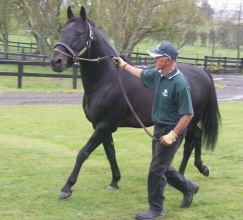
Sire and now damsire, Bettor's Delight with Kevin Foley at Woodlands Stud open day 2012 (photo Bee Pears)

I’m laying out the family credentials so that Bettor’s Delight doesn’t get all the credit!

Peter O’Rourke says the filly Lena Franco, foaled 2005, is a good sized mare and would probably have won a race but was more valuable as a broodmare – by then the signs were starting to look good for Bettor’s Delight so Peter says he was “very happy to have a Bettor’s Delight filly.”

Lot 283 is her second foal.

Peter says the choice of Falcon Seelster for this Bettor’s Delight mare was a combination of looking at compatible US stallion bloodlines and confidence in Falcon Seelster as a proven sire leaving good colts and fillies of value. The fact that the talented Franco Ledger (by Falcon Seelster) is close in the family didn’t enter into the equation, as the timing meant he was yet to show up at the races.

The first foal from Lena Franco was a filly by Lis Mara so there was a bit of doubling up in that combination on the male lines with Cam Fella and on the female lines with Albatross, and a mix of both lines with Abercrombie.

The second foal, this filly at the 2012 yearling sales, is more of an outcross.

It’s interesting to note that as a sire Bettor’s Delight has forged good percentages of starters to foals (44%) and winners to foals (37%) with Falcon Seelster mares. So not unlike the Bettor’s Delight colt in the previous blog, Peter O’Rourke has a reverse cross to a successful “click”.

Read Full Post »

After a 3-blog diversion into “Neddaland” I’m back looking at the new damsires in the 2012 yearling sales. In previous blogs I’ve covered Elsu, Courage Under Fire and McArdle. Now I’m focusing on the two damsire credits for Bettor’s Delight.

Lot 132, Premier Day One, is a colt named Full Disclosure by Christian Cullen out of Maddison Lee. He is one of only two yearlings in the 2012 yearling sales catalogue with a Bettor’s Delight dam – but he certainly won’t be the last.

With Bettor’s Delight building such a strong reputation as a sire now, and as a sire of good fillies, the next few years will see more of his earlier (frozen semen) mares getting in foal  to commercial sires and appearing in the sales catalogues.

And in the future his huge crop numbers will see a swarm of Bettor’s Delight broodmares, all looking for the sire/s that will ‘click’.

And that’s an interesting thing to ponder on, as I will over next couple of blogs – and I invite your thoughts (please post as comments and share your ideas).

Because it’s a bit like Sundon mares in trotting – the sires that unlock that Bettor’s Delight treasure trove of mares will write themselves a chapter in NZ standardbred history.

What proven, new or potential sires do you think will take up that role successfully, and why?

Lot 132 Full Disclosure

Lot 132 Premier Yearling Sales, a Christian Cullen colt from a Bettor's Delight mare

But for now, let’s take a closer look at Lot 132. Lyn O’Connell of Twisted Stick Lodge is the breeder and is very familiar with the family – in fact (as Lyn McLachlan) bred the very good filly Adios Dream from Deborah Dundee, this yearling’s 3rd dam.

Lot 132’s dam Maddison Lee was one of Bettor’s Delight’s first frozen semen crops via Nevele R Stud. She was a 2004 foal, when Lyn recalls the stud fee was around $10,500, so she was bred with a longer view as a quality broodmare. Lyn describes the mare as ’round and not very athletic’ and although she did qualify she didn’t show enough to pursue as a race horse.

She says the choice of Christian Cullen as the sire for Maddison Lee was strongly influenced by the success of Christian Cullen mares going to Bettor’s Delight (with Highview Tommy being one example). “That cross is well regarded and successful, so I am just doing the same in the opposite direction.”

However the yearling has thrown more to the dam’s family, and is neither a big bold Christian Cullen replica, nor the solid round type that Bettor’s Delight can produce. She describes Full Disclosure as a racy type, very athletic, who “paces fast and free legged around the paddock, and wants to be on the go. ”

“In fact he reminds me a lot of Adios Dream and Courage Under Fire as a type – it’s the smaller ones from this family that seem to turn into the good racehorses.”

In the next blog I’ll check out Lot 283, Lexus Franco, the other yearling with a Bettor’s Delight dam. In the meantime, start gazing into your crystal balls and give me some thoughts on who you see as a good future cross for Bettor’s Delight mares, particularly for the many who have In The Pocket and Holmes Hanover as their damsire.

Read Full Post »

The qualities that Nedda had, she passed on to her daughter Nedda Guy, and Nedda Guy passed them to On Time who passed them on to the great racehorse and sire Good Time, his full sister Our Time, and several of her other nine foals (all winners). These enduring qualities were a result of several factors – but probably the most significant one is a thoroughbred mare called Esther.According to www.worldclasstrotting.com entry (this site has a great section on foundation mares/remarkable dams)

“Esther is the only thoroughbred that ranks as a foundation mare with the harness horse. And it all started with Leland Stanford, who wanted to experiment by crossing thoroughbred mares to his sire Electioneer 125.”

Expressive

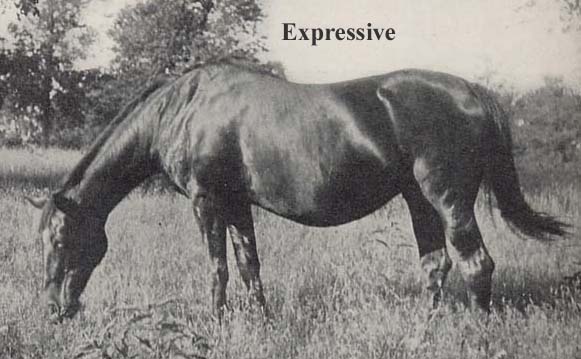
Expressive, dam of Atlantic Express (sire of Nedda)

In 1879 he bought several mares, one of which was Esther, and the resulting foals were all raised as trotters.

One of Esther’s daughters was Expressive (by Electioneer) who was a great racing mare and left some good progeny later in her broodmare career including Atlantic Express, the sire of Nedda.  Atlantic Express is also the damsire of Dean Hanover, one of trotting’s quality racehorses of the 1930s who became a good sire and such an influential damsire. It is Dean Hanover who sired Goddess Hanover, the dam of super mares Cassin Hanover and Arpege – a ‘golden family’ of trotting that led to Angus Hall, Andover Hall, Texas, world champion Ayres,  and many more.

Another of Esther’s daughters was Mendocita (by Mendocino, a son of Electioneer), who didn’t race but whose own daughter Cita Frisco was the dam of the outstanding Volomite.

Volomite, sire of On Time

Volomite, mated with Nedda Guy to produce On Time, Olympia and Mighty Ned

So when Nedda’s daughter Nedda Guy was bred to Volomite, her progeny were 4×5 to Esther on maternal lines. The results are covered in my previous blog.

(Nedda herself was bred once to Volomite for a colt called Prologue who took a mark of 2.10 as a 3yo in 1932 and later stood in a very small way as a sire, first in US and then in Sweden.  But that’s breeding, it doesn’t work 100% of the time for many reasons.)

But let’s get back to Esther – what makes her so special? Followers of standardbred breeding will be familiar with the “x factor” theory, which points to strong evidence of large hearted lines being carried on the x chromosone, and thus able only to be passed from from dams to sons and daughters, but not from sires to sons. Esther is a thoroghbred mare that traces back through her dam Colisseum to Glencoe, sire of Pochahontas – and Glencoe is one who is recognised as a primary carrier of the giant heart of Eclipse. If you want more on this, find the books by Marianna Haun which although mainly about applying the theory to thoroughbred lines also cover trotting examples.

Nedda had another card up her sleeve – her own great-grandam was Ethelwyn (the great trotting family also known as Kathleen) who traces back in two directions on x lines to Eclipse.

Now none of this would have guaranteed Nedda the ability, speed and courage that she showed and that she passed on. But it certainly would have helped maximise her chances.

Sometimes harking to the best of those great heart lines even well downstream can work. That might be by double ups, or it might be by referencing very compatible bloodlines again.

For example, as John Bradley points out in Modern Pacing Sire Lines, some of Good Time’s most successful sons and daughters had 3×3 crosses to Volomite (e.g. Race Time, Good Counsel) and others had 4×4 or similar double ups to Guy Axworthy who was Nedda Guy’s sire.

But I’d like to finish by returning to where this 3-part blog began – a salute to wonderful mother and daughter trotters, Nedda and Nedda Guy.  They had speed, determination, public affection, and even the ability to give punters a fright by making a slow getaway in a race…. Some things never change! For Nedda, born almost 100 years ago, to trot a mile in 1.581/4 is something to marvel at. What a sweetheart! What a trotter!

I was wondering what modern day mother-daughter combination has caught the trotting imagination like this? Petite Evander-Pride of Petite in New Zealand  immediately sprang to mind.

Any others you can think of? Comments please!

Read Full Post »

Nedda Guy was one of Nedda’s five foals and by far the most significant. She inherited her mother’s speed and toughness – and her ability to win public admiration as well as races. She was the star of the 1931 trotting season until a career and life-threatening injury occured – but even that didn’t stop her.

Henry McLemore, writing a column in The Huntingon Daily News on August 18 1932 sums up her public affection nicely:

“The roar goes up when Nedda Guy won the first heat of the Shepherd Stake… “A game little filly,” someone explains. “She’d a won the Hambletonian last year but for injuries in the opening heat.”

There are several accounts of that 1931 Hambletonian, but The Milwaukee Journal of August 16, printed this report from Goshen, NY where the heats were held at W H Cane’s farm on a three-corned one-mile track:

“Nedda Guy, 3-year-old filly owned by W H Cane, which went lame during the running of the second heat of the Hambletonian Friday, probably never will start in another race. The little bay filly, which was pre-race favourite, is thought to have suffered a fractured pelvis bone during a warming up mile prior to the first heat….If Nedda Guy was injured before the start of the Hambletonian, her performance was remarkable. She finished fifth in the first heat and then staged a great stretch drive to land second place in the second heat back of Calumet Butler, which stepped the mile in 2.031/4.”

Nedda Guy was assisted off the track, but first had to be paraded in front of disbelieving favourite punters to show how lame she was.

The story has a happy ending, as reported in The Evening Independent the following year:

“When examination disclosed the fracture she was to suffer the usual fate of seriously injured racing horses, but Walter Cox gave her such excellent care that she is now in sound condition and an outstanding contender for honors in the four-year-old division.”

It’s as a broodmare that Nedda Guy is now remembered – one of her five foals was On Time (by Volomite) born in 1938 who was developed as a pacer. She went on to be the dam of fantastic race horse, sire and damsire Good Time, and thus appears in the pedigree of many top racehorses of both sexes and in many leading sires and broodmares. On Time produced not only Good Time, but a younger full sister Our Time who set a world record for 2yo fillies in 1948 and won over $50,000 that year. Our Time was ranked by Frank Irvin alongside Adios, Bret Hanover, Good Time and Good Counsel as the five best horses he had trained, and she pops up in some pedigrees as grandam of Whata Baron (himself a world champion racehorse).

Another of Nedda Guy’s daughters, Olympia (by Volomite), led to a less illustrious line but one that finishes with a flourish – as the bottom line of Big Towner’s pedigree – notice my old favourite Shadow Wave as the damsire, adding his contribution! Big Towner was a horse with tremendous speed who hardly ever raced on the big tracks where he could use it to full advantage.

Yet another of Nedda Guy’s foals by Volomite was Mighty Ned, born 1942, who appears to have been exported to Italy as a trotter where he won the Prix d’Amerique at 6 and 9 years old and was also second in that race at 7 years old (before having a career at stud).

At its best, this  line appears to really stamp progeny – small in stature (Nedda the “little mare”, Nedda Guy the “game little filly”, Good Time who notoriously started racing at 13.1 hands and ended it as a 14 hand sire) but with a big motor (heart), real speed and excellent gait. As a sire, Good Time often passed on those attributes, and the big heart (through his x line to his female foals) has helped him be such a positive factor in many modern bloodlines.

John Bradley’s book Modern Pacing Sire Lines has an excellent chapter on Good Time

Where did that big heart come from?

This is where Volomite comes in.

And Atlantic Express.

That’s what I’ll look at in the next blog – which is also about a thoroughbred mare called Esther.

Read Full Post »

In my last few blogs I’ve been peeking into the future, looking at some of the new damsires appearing at the yearling sales. In the next few blogs I want to dive back almost 100 years and celebrate two exceptional trotters, a mother and daughter, and the damsire that added so much value to their pedigree.

As breeders and owners, we are delighted when our filly or mare takes a record of, say, 1.58 mile rate. Just going 2 minutes these days doesn’t really stand out from the crowd.

So imagine a trotting mare who went 1:591/4 in race conditions and 1.581/4 in a speed trial – 90 years ago.

Her name was Nedda, and she was an outstanding world champion trotting mare who took her record in 1922. This wasn’t a fluke – although in today’s standards her lifetime stake earnings of $12,294 look small, she won 23 of her 43 starts. Incredible!

Nedda is the great-grandam of the wonderful sire and broodmare sire Good Time, so you will find her in many pedigrees of top pacing sires wherever Good Time appears – including Most Happy Fella, No Nukes, Jate Lobell. Through a slightly different route, she’s also in the bottom line of Big Towner’s pedigree.

At Lexington on October 4 with Harry Fleming in the cart (trainer and driver for many of her races), Nedda lowered the world’s record for trotting mares to 1:581/4, which held good for 16 years until Rosalind reduced it to 1:563/4 in 1938.

A New York Times article of August 13 1922 indicates she was in great form that season:

“Sensational Trotter Will Make Speed Trial At Philadelphia Grand Circuit Races.
Nedda, the sensational trotter by Atlantic Express, that stepped to a mark of 1:591/4 last week over the Toledo track, will be one of the features in the Grand Circuit meet at the Belmont Driving Park here the coming week….”

About a month previously, at another Grand Circuit meeting in Toledo, she competed in three heats of The Maumee 2:05 Trot (value $2,620) winning the first heat and coming second in the others, but still pipped for the purse by a gelding called Peter Coley who won two of the three heats. The Lewiston Daily Sun of July 14 records:

“In the first heat, Nedda overtook the field at the quarter post after a bad start and pulled away for a length win…Nedda trotted a great race in the second heat after getting away fully four lengths behind the others at the flag. Peter Coley won by a nose from the fast stepping favourite but Nedda went the fastest mile of the year, separately timed, completing the circuit in 2.023/4. The little mare made the first half in 59 seconds, the fastest half of the year.”

If you think she sounds tough, just wait till you read about her daughter, Nedda Guy, in my next blog!

It is hard to find photos of these historic race horses unless they became sires. I’ve located one of Nedda on the front cover of a USA trotting magazine from the 1930s (appears to be her rather than daughter Nedda Guy) but cannot reproduce it at this stage – will do so later.

I’ll cover Nedda’s breeding record briefly in the next blog, but any photos or other Nedda anecdotes are welcome – searching the web on dial up is a little frustrating (visualise smiley face with gritted teeth..) 

A quirky footnote: Also at that same July 1922 meeting in Toledo where Nedda was competing in trotting heats, a pacing event was run over four heats. The third placed horse overall (with a 1st, 9th, 3rd and 3rd) was a black pacing entire called Abbedale, who of course went on to many great things including siring Hale Dale, one of the most important sires in our pacing history. You can never tell how things will turn out!

Read Full Post »

« Newer Posts - Older Posts »