Feeds:
Posts
Comments

Archive for the ‘Harness racing’ Category

(A rich and elegant puzzle Part 2 of 3) Why do the sons of successful sires and top broodmares sometimes not make it as a sire? That’s the question I posed to New Zealand breeding consultant/writer Frank Marrion.

The proof of the pudding – by Frank Marrion

I think it is important to remember that no two horses are the same genetically.

You might have brothers and sisters and three quarter brothers from the same mare, but they will still be individuals with strengths and weaknesses.

The foals from Rich N Elegant are a good example.

I don’t know a lot about Richess Hanover, other than that he went amiss as a 2yo and has just been fair at stud standing in Illinois.

Rustler Hanover had some conformation issues which showed up in his foals, while Red River was a big horse who had ‘wheels in his head’ i.e. a nervous temperament. On the whole it seems many of the Red River Hanovers don’t want to ‘be there’ and lack that real genuine racehorse quality where they will always try their best whatever the limits of their ability.

As an individual, Red River was a very good horse of course, winning a North America Cup beating Mach Three, but after that he proved a very difficult horse to get the best out of because he had such a nervous disposition.

I can recall talking to Brett Pelling about him and he was saying that the horse was so ‘wired’, he would never sleep. We can almost certainly attribute this to his dam being by Direct Scooter. While that sire line is a legitimate source of speed, it is also a source of ‘craziness’ and the reason Direct Scooter was not a good sire of fillies.

Red River Hanover progeny and the Direct Scooter line generally produces horses that can be ‘fiery’ or ‘hot headed’ types. They may come with degrees of ability, but getting them to consistently show this or getting them to fulfil their potential, can be entirely different matters.

We can double up to Direct Scooter in various ways, one example being Red River Hanover over In The Pocket mares, and this can produce very ‘speedy’ horses, but one also runs the risk of breeding a horse which is just a lunatic and no racing proposition at all.

Rocknroll Hanover has done very well with his first crop, but it remains to be seen whether he can maintain that momentum with his follow up crops. He would have got a great book of mares when he first went to stud, but that quality mare support would have shifted to other sires straight off the track such as Somebeachsomewhere, because the American breeding scene is very much geared towards first crop sires at the yearling sales.

If there is a problem with a sire, that quality mare support just disguises the inevitable.

I don’t mean to bag Rocknroll Hanover, but I’m not getting too carried away just yet. Very few sires at all make it commercially, so I don’t see a surprise that Rich N Elegant’s foals have not transferred racecourse success to breeding barn success, outside of Rocknroll to date. That is just the way of things.

Pedigrees and bloodlines actually have very little to do with it when a sire does succeed – most of those sires that did find success weren’t rated at all when they first went to stud.

Meadow Skipper could hardly get mares for a start because he had a bad hitch in his gait, and look what he did!

It is mostly about the individual as a type, and whether or not they possess the genetics to be prepotent.

Most sires don’t…and you never really know that until the ‘proof of the pudding’…
Read Full Post »

(Part 1 of 3) Here’s an intriguing question: Why are the fabulous sons of amazing broodmare Rich N Elegant proving a mixed blessing as sires?

First, let me set the scene. Every year the latest hotshot colt is retired off the track and heads straight into a career as a stud. He will join several others who probably raced alongside him, sometimes losing to him and sometimes beating him, and now they are taking on an even more challenging career. Being a great sire.

To have a shot at success as a sire, a colt  must have performed well enough to catch the eye of the trainers and breeders who will be buying his future yearlings. He will have a reputation and a racing media profile that his stud managers can build on. Ideally, he comes from a proven or very commercial sire line. Even better he will link to a strong maternal line that is well liked. His pedigree may offer outcross or ‘golden cross’ opportunities with a large pool of mares in the country or state where he stands, because that will help with the marketing and hopefully the outcomes. Preferably he is a good looker (although a skilful photographer can work wonders). And of course he needs to be fertile.

But even when all the stars are lined up – by a champion sire, from an exceptional broodmare, top earner as a racehorse and brothers who also performed superbly and have gone to stud, a reputation of being from one of the hottest families in harness racing, and good looks…. he might still not strike gold as a sire.

In this blog, I want to take a look at a “rich and elegant puzzle”, a classic example of this situation, and ask the age-old question: Why?

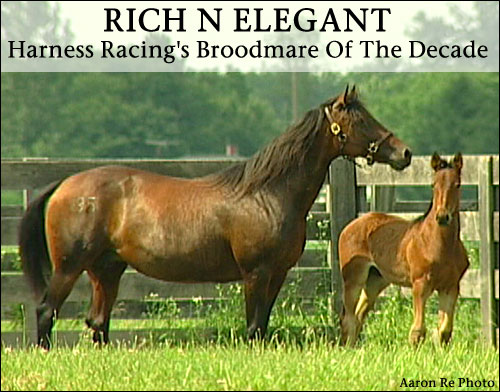
Rich N Elegant - photo by Aaron ReRich N Elegant is one of those mares often referred to as a broodmare gem. She wasn’t a bad racehorse herself, pacing 1:57.4 at 2 and 1:56.8 at 3, and earning almost $US100,000. But it is as a broodmare that she really makes her mark. She’s the dam of 12 foals over the age of 3, and these offspring have already earned just over $US7.6 million to date.

Most remarkably, five of her sons are standing at stud – Richess Hanover, Rustler Hanover, Righteous Hanover, Red River Hanover and Rocknroll Hanover.

Here’s the puzzle. To date, the first four Western Hanover sons have been disappointing at stud. I’m not saying all their offspring are flops. Red River Hanover’s Mister Zion, Red Zone, Code Red, River Field and Garnett River are just a few who have done well. Red River Hanover now stands at Warwick Stud in Victoria for $2500. Rustler Hanover has built up some credentials as a sire in America. He stands at Winbak for $US4500 and is more a mid range journeyman sire now. His seasons in Australia have resulted in only a handful of really successful progeny. Righteous Hanover was a high priced yearling who was lightly raced due to injury and retired. He stands at Stallion Station for around $1500 and has only had a handful of foals with good percentage success but nothing really outstanding so far. Richess Hanover, who raced successfully as a 2 year old, now stands in Illinois at $US3500 but was never available ‘downunder’.

None of them rate as top sires in the highly competitive world of stallions at stud.

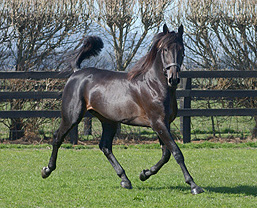
Red River HanoverThere were only six Red River Hanover yearlings in this year’s 2011 New Zealand yearling sales, and four of those were in the last day at Christchurch. That, and the shifting location and pricing of the stallion himself, tells a story. The expectation when he first stood here was based on a strong foundation, but that expectation hasn’t been fulfilled. Neither the stud who stood him nor those people who bred to him could have predicted that.

Or could they? There’s an intriguing question!

This article is not slagging off these talented sons of a wonderful mare, or the many horses that are sired by them, or the breeders who spotted an extremely well credentialed sire and booked their mare. I will be the first to crack open a bottle of bubbly if, for example, Champagne Kiwi (Lot 362 in Christchurch) goes on to win some of the classic 2yo and 3yo races or ends up as our Interdom champ!

What I’m trying to find out is why the excellent pedigree and performance credentials of Rich N Elegant’s sons haven’t led to them becoming reliably good sires.

And then there’s another fascinating question: Why is one out of the five Rich N Elegant sons at stud (Rocknroll Hanover) bucking the family trend and becoming a super sire?

To help me answer these questions, I asked New Zealand breeding consultant/writer Frank Marrion and Australian pedigree consultant Ray Chaplin (www.equineexcellence.biz) to present their viewpoints.

Ray Chaplin uses his analytical techniques to find some possible answers. He assesses the EEA(trade mark) Genetic Excellence Affinity of Rich N Elegant herself with the three stallions she has used, and then compares those stallions’ records in siring champion horses with each other and with two different ‘top sires’ we can access: Bettors Delight and Art Major. The results are fascinating. This blog can only summarise Ray’s work briefly – his full report with the tables is available free of charge by emailing contact@equineexcellence.biz and it is well worth a read.

Frank Marrion takes quite a different perspective, looking at the overall chances of picking a future champion sire based on pedigree and performance, and throwing light on individual characteristics that can have a huge influence on siring success.

Both of them highlight that getting the right type of mares – genetically or temperamentally – can make a big difference to a sire’s early success and reputation.

These views are expressed in the following two blogs.

Read Full Post »

The two Australian companies in my previous blog are specialised pedigree consultants. That’s their primary focus, although they acknowledge the breeding needs to take other things into account.

Breeding consultants, on the other hand, should advise on good matches in a wider sense – compatible types, family strengths and weaknesses, even qualities the market is looking for or what will build future value (broodmare prospects if the foal is a filly).

They should be upfront about any particular breeding or pedigree theory they prefer. Their strength is in their ability to research and understand your mare and her family in detail and to have done the same with a wide range of the sires available to New Zealand breeders.

There are not many independent pedigree or breeding consultants in New Zealand who specialise in standardbreds. In fact Frank Marrion, well known to us as a prolific writer on breeding, may be the only one currently.

The studs have Tesio-based advice and some good insights on their stallions which are useful but don’t fit what I’m referring to here as independent advice.

Frank advertised his consultancy services a few years ago and has since been kept very busy by the response and is now having to cut back this line of work. While this is a pity, it certainly shows that there is a market for someone who is respected for their knowledge and independence. His clients have included some big names in breeding as well as many newcomers wanting a good steer.

Frank doesn’t pull his punches. “I don’t support paper pedigree matching or the search for ‘magic bullets’, as I don’t believe they exist other than the possible benefits of doubling up to superior mares in the right places. Rather I recommend breeding for type, or being familiar with the traits of sire and dam for compatibility and breeding to their respective strengths or away from their weaknesses, and then shortlisting complimentary outcross blood in the sires. The breeder’s budget and plan for the foal also comes into making sire suggestions. But just paper matching, I think that can do a lot of harm and waste of a lot of other people’s money, if the consultant doesn’t care about the individuals in question,” he says.

“Most breeders like to do their own thing, for better or for worse, but there are also a lot who are genuinely in need of some help (particularly relative newcomers to the game) and are really appreciative of an overview of a situation. These are also the people that are most likely to fall prey to consultants!” he adds.

Frank Marrion says budgets and whether the plan is to race or to sell are other important considerations.

“I find Tesio useful for certain things, but I’ve learned that focusing on the mare type and sire type is far more critical. Once I’ve ascertained suitable sire types for the mare, I will use Tesio to come up with an order of preference based on compatible outcrosses – although that sort of thing is pretty much in my head – and supply the Tesio test matings to accompany the reports and recommendations to my clients. I don’t make any promises or guarantees other than I hope to assist people to avoid mistakes,” he says.

Looking at examples of client reports prepared by Frank Marrion, I can see his hallmark thoroughness and almost obsessive attention to detail. As a breeder, I like the insights they would give me into my mare and the clear rationale behind each recommended sire. I would miss the potential X factor, but I can always add that ingredient if I want, or use my own understanding about how to find it.

Frank Marrion’s charges for reports varied, about $300 depending on the time and work involved. If he had already done some work on the family previously it would be at the lower end, maybe $100. ‘Bulk lots’ would see a lower unit price or a negotiated flat fee.

Read Full Post »

We can become familiar with the most common breeding theories, and use free Tesio pedigree charts on the studs’ websites to look at a future foal’s family tree.

But how many of us feel confident that we understand the significance of what we are reading?

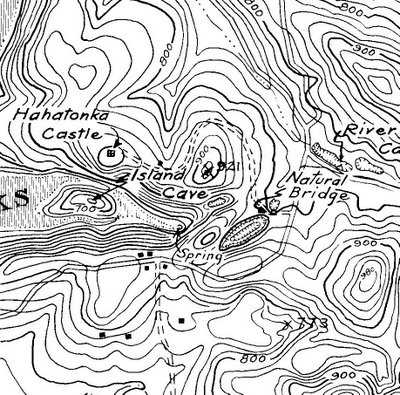
A Tesio chart is like getting a contour map of 50 hectares. It might identify some key features and the slopes, but it doesn’t tell you the climate or soil type or what has been proven grow most successfully on similar blocks of land across the country, or where potential springs of Contour mapwater might be hiding.

It gives you useful data, it identifies double ups, and it points you towards some classic mares. Is that enough?

So there are some good reasons to get advice from a breeding or pedigree consultant, or others who can shed light on the basic contour map of a pedigree chart:
• to save you the time it takes to do extensive research
• to access information not easily available to you
• to identify successful patterns
• to spot small but significant ingredients
• to get advice that is outside immediate fashions and opinions. 

I don’t take anything as ‘gospel’ – but it all adds to my knowledge and ability to hopefully breed more successfully. And it’s certainly more interesting that putting on a blindfold and sticking a tale on the donkey!

Read Full Post »

I believe that genetic traits can endure through many generations, if they are kept strong by correct matching. That depends on whether the breeder helps increase the odds by putting pedigree matching as one (not the only) factor into sire selection.

This is the approach of Equinex Breeding Service Ltd, the Australian pedigree consultancy I’ve used on several occasions as one part of selecting a sire. Mike and Ricky Goode are quick to acknowledge all the factors that go into producing a good racehorse including conformation and a good feeding regime for the mare and foal, but their service advices on one key factor – the genetic capacity of a breeding match to produce a quality offspring, specifically a match that maximizes your chances of getting a performance enhanced X chromosome from the sire or dam.

They use an extensive computer database of horses, both good and poor performers, to evaluate what is a poor, fair, good, very good or excellent genetic source for any horse (standardbred or thoroughbred) in the world. They assess your mare’s genetic strength and where it lies, i.e. her X chromosome sources from her paternal and maternal sides, and then search for stallions that have ‘genetic affinity’ with those sources. This affinity, they say, increases the chance of inheriting her excellent X chromosome source. Without this, you are pretty much “subject to the random and lucky spin of the genetic wheel”. It’s an opportunity to reduce the odds of breeding to a genetic source that doesn’t complement your mares and will in fact weaken the genetic structure of your breed in future.

The fact Equinex is based in Australia doesn’t bother me a bit. I am not looking for local knowledge, but rather for unbiased advice based on analysis and comparisons of a huge number of pedigrees that I have neither the time nor resources to examine. You need to set clear parameters about the commercial nature of the sire or his location so you don’t get a recommendation for a sire that isn’t available or is not commercial here – but that’s just an indication that they are evaluating purely on genetic structure and compatibility.

Another Australian based pedigree consultancy I’ve used is the online service http://www.equineexcellence.biz. They also focus on the Jim Squires’ elements – a sound and persistent genetic structure and the importance of the maternal contribution, but acknowledge the need for the breeder to look at other key factors like conformation and temperament. Like Equinex Breeding, they place importance on the X chromosome. The company has a matrix of factors that have helped them develop an algorithm they can run through their database that will identify genetic excellence characteristics in your mare and a range of potential suitors, and hopefully “genetic excellence affinity © “ between particular  recommended sires and your dam.

A load of codswallop? Are they taking your cash in exchange for mere opinions or weird theories they don’t have to explain? Or are they experts who can give you insights well beyond your own reach – the baking powder for your cake?

Both these consultancies have websites that explain their approach in more detail. The low cost discussion papers put out by http://www.equineexcellence.biz are provocative reading and show the emphasis they place on research and hard evidence. If you have an open mind, they will take you to some interesting places!

In both cases, you can get information directly relevant to your mare/s for around $300 to $500 – about the same as a working fee or the GST on your stud fee. A frustration arises from the commercial nature of their businesses which prevents them from sharing the detail at the heart of their analysis of a match, the specifics of a “genetic affinity”. But returning to the cooking analogy – it’s no different from buying KFC and getting a box of fried chicken but not the secret recipe for the herbs and spices.

Read Full Post »

(The art and science of breeding Part 3 of 3)

There’s a lot of wisdom in the so-called feminine arts that provide a nice counterweight to the strutting PR about a sire’s performance on the track and the endless rankings based on ‘my season earnings are bigger than your season’s earnings.”

In Jim Squires’ foreword in “Racehorse Breeding Theories” he writes:
“A quarter of a century of personal unraveling has yielded only a few precious strings to which to cling: one, that genetic traits can indeed persist through many generations, not just two or three; that mating solely or even mainly on the basis of pedigree without physical consideration of the two animals is idiocy; and that the importance of females has been and continues to be vastly underestimated in the equine world.”

Let’s look at his first and third ‘strings’ – persistent genetic traits and important females. It’s good that he talks about strings and unraveling, because it leads me nicely into knitting. Yes, knitting.

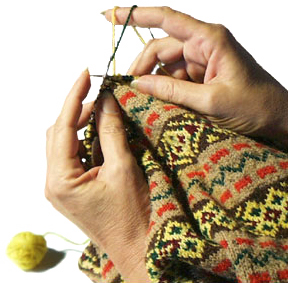
fairisle knittingWhen I’m studying pedigrees I keep in mind the art of fair isle knitting.

That’s the traditional style used in jumpers, vests and hats where different coloured yarns form patterned bands.

The knitter uses ‘active’ colours while other colours are simply held behind the piece, carried as a loose strand of wool yarn and introduced when the pattern requires it.

On the right side is a highly structured and balanced pattern that creates an overall impact – stunning.

On the reverse side it looks almost messy. You can see individual coloured threads weaving in and out, some of them looped along a row, held back and waiting to add their unique element to the pattern again. 

Two yarns can form a striking pattern if they complement each other, and other colours can be kept going in the background and reintroduced at the right time to lift the pattern to another level or form a new one.

I have a liking for certain strong maternal lines and the great broodmare sires associated with them – the wonderful McKinney sisters, Spinster, Old Maid and Breath o Spring, the underestimated Nedda, and of course Leta Long and Meadow Cheer amongst others.

These are mares and families that have had a genetic influence way beyond their own lifetime. They are ‘persistent’, like the coloured yarns the knitter holds loosely at the back waiting to reintroduce into the pattern.

There are more modern broodmare gems that are developing powerful maternal lines, although unlocking their potential can be a puzzle –Lismore/Lisheen, Three Diamonds and Rich N Elegant come to mind as wonderful maternal lines of recent sires whose genetic potential we are have struggled to activate in New Zealand, yet. (In a later I’ll examine the ‘rich and elegant’ puzzle in more depth).

Read Full Post »

(The art and science of breeding Part 2 of 3)

In my view, there is no “magic bullet” for successful pedigree matching. It always amuses me how double ups are bolded in the Sales catalogue pedigrees, as if that somehow signaled a highly significant factor we should automatically pay more for. In some cases, maybe. But often not.

My personal approach is to look for things that are complementary rather than the same – “what likes what” rather than “like with like”.

It’s a bit like cooking.

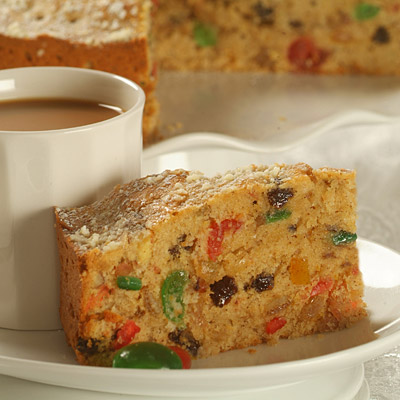
You don’t really need to follow a strict recipe for a good fruitcake. If you gather the basic ingredients (flour, eggs, sugar, butter, and dried fruit) in the right proportions you can put a cake together. The cake is the result of mixing things that aren’t the same, but complement each other. The total is greater than the sum of its parts.

Too much liquid and it won’t set. Too much flour and it will crumble. Increasing one good ingredient a lot can throw the ‘whole’ out of balance.

In breeding terms, doubling up a recognised genetic speed factor may reduce stamina or increase risky temperament traits, and inbreeding or loading up with a common dominant sire may demand subsequent outcross breeding to get a family back in balance.

Getting your proportions right and blending them into a consistent mixture is vital for success. In this fruitcake analogy, the main ‘ingredients’ might be all the factors you put into your breeding decision mix.

For me, that means conformation, character, commercial factors, family performance, and pedigree, with commercial factors being the ‘sugar’ content I can reduce if I need to go ‘lite’ for financial reasons. If you are focusing on pedigree matching alone, these main ‘ingredients’ might be more specific phenotype and genotype inputs such as speed, gait, stamina, or perhaps so-called golden crosses or perhaps relative positions within the proposed family tree e.g. 4x4x4 to Meadow Skipper, or the Rasmussen theory, or specific dam or sire lines you want to include.

You are focused on proportions and achieving a certain balance when complementary things are combined.

However there’s more to a fruitcake than those obvious ingredients. It will turn out flat and tasteless without some small but vital items – a pinch of salt, a teaspoon of baking powder, or a dash of vanilla and almond essences.

These are the things that will lift your cake to another level (literally, in the case of baking powder!) 

In breeding terms, these small but key ingredients are what I want to find when I go looking for what ‘nicks’ with what, and when I learn that a sire stamps his foals with a longer stride or a mental toughness or better bone density, or when I use a new feeding programme that gives foals a stronger foundation.

You might seek those ingredients from an “instant packet” (a breeding consultant’s or other expert’s recommendations) or from reading lots of recipe books (study and research) or by developing your own highly tuned taste buds (your own breeding theory or intuition), it doesn’t matter. In the end, the proof of the fruitcake is in the eating.

And that is why breeding successful racehorses is a fascinating challenge and the search for the right ingredients continues.

Read Full Post »

(The art and science of breeding Part 1 of 3) There are some breeders who pay scant attention to pedigree matching and believe it is less scientific than pinning the tail on the donkey.

Maybe. But evolution tells us one thing very clearly – genes do matter.
Like most things, in my view, there’s a bit of science and a bit of art in breeding.

The ‘science’ part is relatively straightforward. Science informs the advice we get about what we feed our mares and foals, health issues, fertility, biomechanics and so on. There is also a wealth of hard statistical data on the relative success of sires, progeny percentages, and so on. Add to that an impressive array of breeding theories that have some decent research behind them – such as the theory that large heart genes are carried on the X chromosome, and consequent debate about whether a large heart is vitally important for the type of short distance speed racing we are increasingly preparing horses for.

Frank Mitchell’s easy to digest book “Racehorse Breeding Theories” summarises many of the key breeding theories that use a ‘scientific’ approach (i.e. rigorous research and working methodically with data to try to find results that are repeatable – a system for success).

Don’t skip over the foreword to this book, written by Jim Squires of Kentucky. It is a beautiful statement of the huge gap that is still left between the search for scientific evidence and the actual breeding of a brilliant race horse.

Right now I am going to divert into a couple of weird and wonderful analogies that illustrate the balancing science and art when it comes to breeding – and the importance of not underestimating small ingredients that punch above their weight.

Read Full Post »

One possible source of good breeding advice is experienced, successful New Zealand breeders.

Studholme Bloodstock’s Brian West and Alta Dream Lodge’s Tony and Val Dickinson kindly give their advice and thoughts about breeding, pedigree matching .  I regard both of them as successful breeders because (going right back to my very first blog) they have thought long and hard about the “U” part of the equation – what they are trying to achieve. For example, Tony is measuring his success less by the immediate financial returns at the yearling sales and more but the outcome on the racetrack when the horse matures. Brian has a strong sense of what sires are trending commercially but not at the cost of compatibility with the mare’s pedigree and type.

Bee: Have you ever used a breeding consultant or consultancy as one of the inputs when you are deciding a match or assessing a potential broodmare purchase? If so, was it helpful and was the result successful?

Tony: Yes, I do use a consultant but only to analyse the progeny pedigree (filly or colt) for stallions I have already shortlisted for other reasons, e.g. size, conformation, fee, stud performance etc.

Brian: No. But I have talked to Jim Dalgety many times over the years as a mentor and he has been very helpful. He is an incredibly knowledgeable man, who deserves far more recognition for what he’s contributed to our industry.

Bee: Do you think breeding/pedigree consultants are a rip off or a waste of money?

Tony: Of course they are not a rip off – any help from this quarter is useful and it is up to the breeder to decide how much weight to attach to the advice.

Brian: As long as the person’s credentials are okay, it’s not a bad idea at all. Breeders can always do their own research if they have the time. But if you are new to the business (and it is a high-risk industry) you need as much advice as you can get.

Bee: What advice would you give to someone who was considering using a breeding or pedigree consultant?

Tony: Beware of pedigree analysis which delves deeply into obscure family history simply to reinforce the consultant’s own preference for certain sires or sire lines. In years gone by, stallion owners were quick to debunk theories, such as cycle breeding, genetic sibling matches, ‘golden’ crosses and so on, when their stallions did not suit the theories. This doesn’t happen much now because fewer and bigger stud farms have an array of stallions to cover most eventualities. But it was certainly prevalent around the time that John Gaines famously referred to breeding consultants as ‘charlatans’ as he looked to protect his extensive interests in the horse industry.

Brian: Find out what they have bred of note, or what they have suggested to others and why they chose that sire. If they are putting themselves up as an expert you would expect to see some success in their own breeding decisions.

Bee: Do you use any standard breeding theories in making your sire selections (e.g. line breeding, outcrossing, x factor, returning to the sire the best blood of his dam, etc)?

Tony: I am very much influenced by the need to replicate famous matriarch blood, particularly if it sits in the pedigree where the x factor can be transferred to the progeny.

Brian: I tend to look for a total outcross or 4×4 to Meadow Skipper or a combination of that. But in terms of advice to others, I suggest a good place to start is to print out the pedigrees of the top 10 or preferably top 20 two and three year old horses in a season. Study the pedigrees closely and you will start to see what might work, and identify some of the ‘nicks’ that are successful.

Bee: What do you think of the saying: “Breed the best to the best and hope for the best?”

Tony: Alright, as far as it goes, but that’s not far enough in my view. Every breeding theory can be justified in some way. However, nothing substitutes for good hard research into a mare’s family history and the proposed consort/s race and stud performance and pedigree compatibility. An orderly, considered approach beats the random method of sire selection.

Brian: It’s a cop out. As you go on, you reach other conclusions.
Bee: When you select a sire for your commercial broodmares, what factors are most important to you: (Possibly all of them, but what 2 or 3 are most important?)

A. Likely commercial appeal of sire.
B. Pedigree compatibility on paper.
C. Physical type complements mare’s type.
D. Sire’s reputation regarding type he leaves (physical and/or temperament)
E. Service fee
F. Similar pedigree matches are successful (in that family, as ‘golden crosses’, or in a top race horse/s)
G. Sire is proven.
H. Other

Tony: Physical type complements the mare. Service fee.

Brian: Pedigree compatibility on paper. Sire is proven (sire line successful, he performed as a 2yo and 3yo, and he has had success as a sire). Physical type complements mare. Service fee.

Bee: Any other comments about approaches to breeding that you feel strongly about?

Tony: The commercial appeal of a sire is important, but we don’t let that consideration over-ride our desire to breed top performing racehorses – as distinct from breeding yearlings (remember, there are no races for yearlings!) If we bred solely with the yearling sales in mind, we enter the ‘fashion fickle stakes’ wherein a popular stallion today may be out of favour in two years just when the yearling goes on the market. We look to create a point of difference, patronizing a mix of sought-after sires and new, unproven sires for our mares where we are convinced that the resultant mating is in the best interests of the foal making it to the racetrack.

Brian: You do have sires that serve you well, and mares or families that serve you well. In terms of mares, I’ve got about 30 mares at the moment and at least 10 of them are from the Dream Bel family. And for sires, early on Soky Atom was a sire I really went for. I’ve had a go with some of the good Australian-based ones in the past, like Walton Hanover and Village Jasper, but they didn’t sell well here. You learn as you go. Usually I prefer proven sires, but I will take a punt on a third year sire which might be at a slightly reduced fee because that’s the year they can struggle to get mares. And I will take a punt on a new sire if he meets most of what I want. I can take those risks with some of my mares because I have the numbers.  I usually make a longish short-list at the beginning of the season, then reduce to about 5 or 6 sires.

Read Full Post »

(Stamp of success Part 6 of 6)  Is there enough evidence of ‘stamping’ by sires to factor it into our breeding considerations?

Yes, there are attributes that show up often enough and strongly enough to indicate “genes at work”. This doesn’t mean it will come from the sire to the foal every time. Nor does it overshadow the contribution of the mare, the upbringing and other environmental factors. However it is worth putting into the mix.

How can we breeders find out more? Nothing beats seeing a sire in the flesh – and seeing a large number of his progeny in the flesh. So breeders need visit the sires they are interested in and also encourage the studs to continue to have open days.

Yearling sales are a great way to see a whole lot of a sire’s progeny at the same stage of development and pick out any distinctive ‘looks’.

Luckily breeders can now get age-related foals/starters and starters/winners statistics from here and overseas which can provide insights about a sire’s ability to leave early types. We can also find articles written about many of the sires during their racing or when they retired that can highlight quirks of temperament or physique.

At yearling sales time, major buyers tap the experience of those who handle a lot of horses to get the advice that will help them make better decisions. There is no reason why breeders can’t do the same at breeding time.

Talking to trainers, breeders and those who break in young horses (particular those who deal with larger numbers) can help us get an insight into what sort of foals a sire might be leaving.

However be aware of how quickly myths and opinions based on handling one or two horses can gather momentum.  Sundon (“they’re all mad”) was too good a sire to let that stop him. Mach Three (“gutless under pressure”) is the latest if you believe some of the Race Café dwellers (but who does).

There’s heaps of room for more qualitative research on ‘stamping’. It’s not about rating sires against each other or spreading rumours that can ruin a sire’s career.

It’s about identifying what qualities a sire might add to our mix – and therefore help us beat the odds.

Read Full Post »

« Newer Posts - Older Posts »