Feeds:
Posts
Comments

Archive for the ‘Standardbred breeding’ Category

It’s Alabar NZ stallion parade this Sunday 15 September at 1.30pm. I attend every year because it is a huge opportunity to look more closely and judge more accurately some of the factors you may want to put into the mix when you decide on a match for your mare. And how different they are. As the parade unfolds you see the tall and the smaller, the stocky and the slim, the handsome and the plain. You know each one has fantastic credentials as a racehorse and often already as a sire. Success comes in many different packages!

My interest this time will centre on seeing Big Jim (for the second time), Majestic Son in the flesh, and also to see Auckland Reactor for the first time since I was amongst the crowd cheering him at Cambridge races.  I always had the impression of him being quite a big lanky horse, but my understanding is that he is medium sized at 15.2h.  One of the best looking horses I’ve ever seen is his sire, Mach Three, who will also be parading.  He’s stamped his length of body and great gait on a lot of his foals, but many of them don’t inherit his good looks when they are young and initially that counted against him at the yearling sales. But his record has turned that around.

Talking of Auckland Reactor, how much money has gone into that advertising campaign to jog memories of his “x factor” and his speed and help us overlook the failures in his career management and the niggling doubts many people have had about his mental toughness? It shows just how much a sire’s career can be helped by owners with a wad of money to back their investment!  In a previous blog I talked about the “fashionable” new sires, and how that is a hype created just as much by the need for studs and owners to get a return and grab a niche in a competitive market, as any innate ability of the sire or even their ability to capture imaginations as a racehorse. The marketing of a sire is aiming at future buyers as well as current breeders. The foals will sell if the hype about a sire catches on. If buyers don’t buy, the breeder support can quickly fall away.

Like most of advertising, is it all about creating perceived needs rather than having a product that will meet those needs.

So breeders, it is up to us to pretty much disregard the hype and look at what is best for your mare and your aims in breeding.  Sift the advertising and the advertising for the real information you need.

That is why the opportunity to see these horses in the flesh is one to grab if you can. See these horses for yourself and talk to the people at Alabar who are closest to these wonderful sires. Graeme and his team at Alabar are refreshingly upfront about sharing insights and information.

Read Full Post »

Hindsight is a glorious thing.

And in hindsight we will be able to sort out the strange situation we have at the moment where a sire like Grinfromeartoear, who is not a glamour boy in the siring ranks, now has 3 sons at stud in the southern hemisphere*, while Bettor’s Delight, who has been incredibly popular and serving big crops here for 6 years has had only Kenneth J and now this season Betterthancheddar borrowed from the northern hemisphere and having a go downunder in a truly commercial way – and of course his brother Roll With Joe.

Kenneth J  has had reasonable but not large foal crops so far – there was a huge lack of interest in New Zealand (4 live foals), but more traction in Australia with 63 foals in his first season, 51 in his 2nd season and 49 in his 3rd season for a total of 163. So the earliest foals have only just turned 3yo, and it is hard to tell yet what those results mean. He’s had 18 starters from his first crop of 63, for 6 winners. The 6 in Australia who won as 2yos cover a range of earnings from $4,625 to $82,544  – the latter being a filly called Im Bella Jay, from Belturbet (a Barnett Hanover mare out of Chivasso, a New Zealand bred Save Fuel mare.  Chivasso is of course the dam of NZ very good mare Donegal Delight by Bettor’s Delight).

Check out some other sire lines here: Mach Three now has Auckland Reactor and Sir Lincoln as local representatives, as well as access to Somebeachsomewhere.

Both Christian Cullen and Courage Under Fire (by In The Pocket) were exceptional racehorses and sires, but look at the differences when it comes to sons at stud. Christian Cullen has already got several “options” at stud, while the Courage Under Fire has only got a freshman sire about to start. Courage Under Fire is an oddity – and yet not unlike Bettor’s Delight in this debate – such a remarkable horse and sire, but has taken many years to get just one son, Lanercost, finally standing at stud. For all the very good horses he has left, none have had breeders drooling at the prospect of sending their mares in that direction. And like Bettor’s, some of his best have been geldings. Compare that with Christian Cullen who has half a dozen options (not all will make it) but the range of potential inheritors is at least maximising Christian Cullen’s chances of leaving a successful son at stud.

What makes a siring line get traction with breeders?

Is it breeder/buyer perception in a commercial sense? (In which case why has Grinfromeartoear got the jump on Bettor’s Delight?)

Is it the domination of the dad that make it hard for the sons to compete? (In which case why have Christian Cullen sons been so willing to line up as sires as soon as possible, while Bettor’s Delight sons have held back?)

Is it the quality of the potential sire as a racehorse that make the difference?

That is an intriguing question, when you look at Bettor’s Delight.

What an amazing sire. And yet if I ask the question: So which of his outstanding sons in NZ, now 3, 4 5 or 6 years old, would you name as potential sires….what names spring to mind? (Even taking geldings into account?)

Highview Tommy, an entire? A racehorse I love and his owners do too. Gutsy little guy, proven. But a sexy sire that would attract mares? An inheritor of Bettor’s Delight’s mantle as a sire here? I can’t see that happening commercially.

Border Control and Five Card Draw are the only real contenders in New Zealand to date – and woops, both are geldings.

It is an interesting puzzle. Why some sires produce a legacy of sires. What will happen with the siring line of Bettor’s Delight?

Then again, numbers are not everything. Some of the most potent sire lines have held on by a single (sometimes relatively unfashionable) sire.  While others have had to spawn many in the search of a successor. Life
Sign is a good example of that, a fantastic sire who has struggled to leave a son/s to carry on his line. Real Desire has that chance and I personally like him a lot, but he has a battle now to show it, given his “here today, gone tomorrow” history as a sire in New Zealand.

But I still find it unusual for such a hugely successful sire, with such large numbers of foals on the ground, to have yet to produce a potential successor in this part of the world.

Perhaps, in the end, it is horses for courses. Some are just amazing sires.

And that is enough.

Having said that, I will check out Betterthancheddar in a blog soon. He’s got a pedigree that will intrigue many breeders here.

* Mr Big, Mr Feelgood, Smiling Shard – plus his own continuin performance as a sire!

Read Full Post »

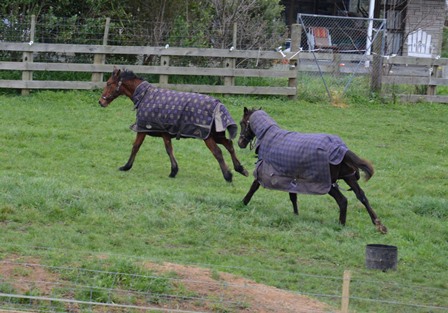
It’s a beautiful cool, sunny Spring morning and “the boys” aka Thephantomtollbooth (Real Desire-Zenterfold) and Isputtingonmytophat (Pegasus Spur-Sun Isa) are sprawled out in the paddock loving the fine weather and warmth of the sun, looking like two logs!  They are great mates. Both are heading to the yearling sales at Karaka in February.

Isa lodge colts

View from my balcony – the boys sunbathing

They are not always so quiet! Here a photo of them having a real hoon around:

Isa Lodge colts

“The boys” having a hoon around the paddock.

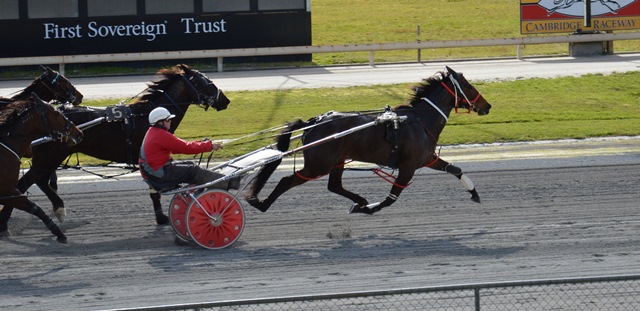
Last night a horse Kym bought as a weanling from Alabar had her second start at Alexandra Park and got a very good second after being parked most of the way. She’s a lovely type of mare, stamped strongly by her sire Sutter Hanover. Named Driving The Dragon (from Shark Alert), she qualified as a 2yo but Kym and trainer Barry Cullen have been patient with her, allowing her time to grow into her big frame, and she is now a 4yo.  She comes from one of those families that now and then throws a real good horse, but otherwise struggles. Her grandam Alert Sue produced the very good Napolean (67 starts, 18 wins) and the handy Alert Motoring (36 starts, 8 wins) and a branch of the family (Disco Girl) produced the great Christopher Vance. But overall it has been hard going for the breeders. We like to think Driving The Dragon will be another one ‘out of the box” for the family! Here’s a recent photo of her winning a workout at Cambridge:

Driving The Dragon mare

Workouts winner Driving The Dragon

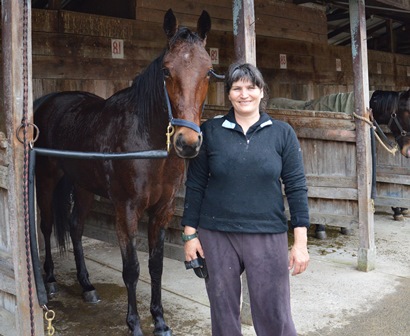
Another weanling purchase from Alabar is Elect To Go (Gotta Go Cullect-Innsbruck), now a 3yo filly that Kym and I  co-own. She has qualified and is having a spell, hanging out with Kym’s third weanling purchase, Souvenir Glory, now 4yo, who had a few races last season and is a competitive little Elsu mare. Like many of the Gotta Go Cullects I have seen, Elect To Go is not a big type – neither was Gotta Go Cullect. They seem slighter, speedy types. This filly is a very willing horse, doing everything right, and should strengthen up for her next time in.

Kym Kearns with Elect To Go, August 2013

Kym Kearns with Elect To Go, August 2013

But back to the breeding side of things, which is Isa Lodge’s main focus.

  • I’ve booked Zenterfold to Rock N Roll Heaven. She will be foaling this year (McArdle) at Patumahoe for co-owners Geoff and Aria Small.  She’s our “shuttle mare”, moving year by year between Cambridge and south Auckland and taking it all in stride.
  • I’ve booked The Blue Lotus (daughter of Zenterfold) to Shadow Play and will be off to stud in a couple of weeks (see my blog earlier in August about this match).
  • Kym’s trotting mares – Sun Isa is booked to Pegasus Spur and her half sister Toggle is booked to Majestic Son, and they will also be off to stud shortly.
  • And Sophie’s Choice is booked to Tintin In America. She’s the mare I’ve leased from Lynda Mellsop who is currently having such a great run as owner of Carpenters Daughter in Australia.

Other news – It appears Destination Moon’s injury is not the hairline fracture it was first thought to be and he could be back racing sooner than expected. He’s the full brother to The Blue Lotus (Grinfromeartoear-Zenterfold) and showed a heap of promise in his first few races as a 2yo for owner Kerry Hoggard and trainer Steven Reid.

And final bit of news: I have bought a half share in a Tintin In America yearling from a half sister to Bit Of A Legend. More about that next time.

Read Full Post »

In my previous blog, I quoted this from a book about pedigree theories and the science of genetics, by Dr Matthew Binns and Tony Morris:

In the old days, when racing was dominated by wealthy owner-breeders, the breeding goal was to produce the best racehorse possible. The breeding goal of most Thoroughbred producers now is an animal who will generate a high price at the yearling sales.

I think standardbreds have always been the “poor cousins” or “blue collar” version of racing, so I don’t think the same trend really applies so much, or at least not for the same reasons, as I’ll explain.  Our early days were more about local farmers competing over hedges on farm hacks or driving carriage races down country roads!  In New Zealand, owners and breeders of horses generally have often been farmers who were not necessarily wealthy in monetary terms but owned the land necessary to breed from a number of mares and raise good stock.

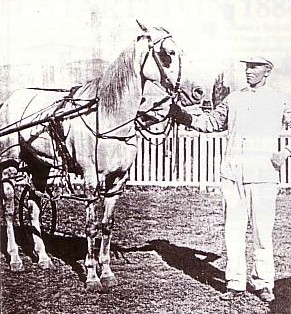
Wairoa Belle 1920 New Zealand

Wairoa Belle 1920 New Zealand – for the full story – a lovely one- go to bottom of this blog post

They were “hands on” people, much as in the rural parts of North America where harness racing developed.  And like North America, New Zealand and Australia were moving away from the wealth-driven class tiers of British society and into nations were ordinary folks could “have a go”. The emphasis was less on developing the best racehorse possible, and more on breeding a decent horse that could beat the neighbour’s or win at the local track or aspire to the top races. Their motivation was less about improving the breed and more about enjoying their hobby and any rewards (including kudos) that came from it.  It sometimes became a passion, but not a symbol of class or wealth.

The roots of harness racing in New Zealand are in stock rearing and stock management, which we have always done well, being blessed with great grass growing land and a temperate climate. So having a few trotting or pacing mares alongside the cattle or sheep was hardly an issue.

That natural advantage, combined with the efforts of visionaries and importers like JR McKenzie (a businessman, not a farmer) and later his son Roy of Roydon Lodge, meant we kept our breeding in touch with modern trends, but not dominated by them.  And it often required the injection of capital from local businessmen (rather than farmers) to add a more commercial slant to our racing game.

Time has increased the value of farmland and changed the nature of farm ownership. Nowadays, as research presented by John Mooney at the NZSBA conference this year surmised, this has impacted on the ability of people to afford to breed horses. Farming is more commercially focused and the generation that dabbled in horses as a passionate sideline to farming is literally dying out. The price of quality farmland is unaffordable to younger people – and if they do get some, their priority is to use it as productively as possible. The issue is the same for people who want to get into training – the demise of the “ovals” on every second farm in the Waikato and the need to open up more shared training venues as they have done in Australia.

Even for small-time breeders like myself, the ability to buy enough land to carry a few mares is mostly beyond our reach. The cost of breeding cannot be absorbed as a farm cost like the old days, and becomes a separate expense using leased land or agisting mares as stud farms. And of course that immediately sets up a barrier for many – especially when the returns on a high risk investment are so vulnerable.

So getting back to the quote at the start of this blog, the option to breed to get a good return at yearling sales is not motivated by greed, but rather by necessity.  If I am paying out for grazing land and carrying high risks and high costs, I will be motivated to make breeding choices that give me a higher (or quicker) return. Actually, personally, I am not motivated by that but it does come into my breeding equation i.e.  breeding something good will build the reputation of my mare and therefore ensure my future returns are as good as I can make them.  I have gone to less fashionable but ideally suited sires to ensure this, but I see that as an investment.  I simply cannot afford to be a “hobby breeder” that doesn’t consider the financial implications, not so much short-term but definitely longer term.

In recent years when yearling sales returns have struggled to give adequate returns for many breeders (once you take costs into account many just break even or get a very low return for the risk they take), all that remains is the passion for breeding and – ironically – an incentive for the “poor” rather than the “wealthy” to breed an exceptional horse to lift you out of the rut.

Is that a good thing for breeding? Probably not, but very much an incentive for those who have hung in there! The commercial signals are very much orange traffic lights, and a short-term commercial approach to breeding is fully understandable, if potentially limiting for the overall future of the breed.

In a future blog I’ll look at how personal and “industry” breeding goals don’t necessarily line up – unless you have good leadership and clear signals.

If that happens, we can get out of this bind, and into a period of growth for individuals and the overall industry. Do we have the courage to do it?

PHOTO IN THIS BLOG  – YEAR: 1920

In 1919 Leo Berkett swapped a pacer he used in his gig with a clergyman for an aged grey mare, Wairoa Belle, which had good pacing blood in her on the side of her sire, Dictator. On local roads he found Wairoa Belle showed well against the horses of other gig owners and had a fair turn of speed.

Leo decided to enter her in races at the Nelson Trotting Club’s summer meeting. The 1920 programme included both saddle and driven races. On the first day Wairoa Belle did not run well, but, on March 20, with advice on adjusting her hoppples, Leo Berkett rode her to lead the 14 horse field all the way to win by two lengths.

She paid the biggest dividend in NZ trotting history of £1033/5/-… a staggering sum when the average weekly wage was less than £10. Leo Berkett had no money on the race, the one and a half Wakefield Handicap, but one person had. He was a Nelson grain and seed merchant, Mr S C (Chummy) Levien, who was so pleased by the win that he gave Berkett the odd £33.

The stake of 55 sovereigns also went to Berkett as owner. The time for the race was 3min 59sec.

(This is one of many great stories in the Addington Raceway Timeline website – just google that for lovely stories of great New Zealand harness horses)

Read Full Post »

In this blog I want to share some thought-provoking ideas about selective breeding to improve the quality of racehorses and the genetic stock of mares. It comes from the thoroughbred side of life – but don’t let that put you off. I don’t agree with some of it, and will say why.

What’s more important is keeping open minds and encouraging discussion. That’s often not a strength of our industry, but it is what my blog tries to do. So read on, and have a think about it. And please respond if you want.

NZSBA chair John Mooney sent me an extract from a book he’s been reading called Thoroughbred Breeding – pedigree theories and the science of genetics, by Dr Matthew Binns and Tony Morris. One chapter looks at how selection of breeding males is intense and only a small, select few go on to be successful sires – but they have a significant impact on the breed through the production of large numbers of offspring and the establishment of breeding lines.  The improvement of females through selection is much weaker, with lower grade mares lacking performance and soundness having often been allowed to breed to meet the market for numbers of racehorses, at least until the recession bit from 2008.

The authors go on to say:

The lack of selection on the distaff side in Thoroughbred breeding inevitably presents a major barrier to genetic improvement, and although the recession…will doubtless lead to many inferior females being withdrawn from the production line, their removal will make little difference; a technique which could bring advances has been developed and is available, but it has not been sanctioned by the Stud Book authorities who control the breeding of Thoroughbreds.

Embryo transfer…is a procedure which would enable better-quality mares to produce several offspring per year instead of the one decreed by Nature. In this way the number of foals born might be retained while improving the overall quality of the breed, but current regulations do not even allow foals to be conceived by artificial insemination, so the introduction of embryo transfer is something for the distant future, if ever.

Readers of my blog will know that I advocate for full consideration of a system for standardbred breeding that allows 2 foals in a season from the same mare, one carried by that mare and the other by embryo transfer to a surrogate mare.  So it is interesting to see this issue being raised in a different context – for improved breeding of thoroughbreds.

Having said that, I’m very aware how different the thoroughbred situation is from ours – we have already introduced artificial insemination and allow some embryo transfers.

However I don’t agree that genetic selection to improve the breed is what should drive the decision to allow more than one foal per mare.  I’m more interested in it as a way of keeping breeding numbers up, increasing diversity and providing commercially focused breeders with better opportunities to get a return on their risky investment.  There is, in my view, a need to maintain a level of genetic diversity (however limited it is within our very inbred industry) rather than a simplistic “breed the best to the best” approach.  That is one reason I have suggested two foals per season as reasonable (and from different sires, so that breeders are encouraged to be more adventurous in their selection of sires for more commercial mares).

The authors go on in the same chapter (Selective Breeding) to discuss how financial drivers of breeding have also held back good selective breeding practice:

In the old days, when racing was dominated by wealthy owner-breeders, the breeding goal was to produce the best racehorse possible. The breeding goal of most Thoroughbred producers now is an animal who will generate a high price at the yearling sales. This leads to mating plans based on fashion, and, in defiance of logic, the most fashionable stallions are often the newest recruits to the ranks. Although everyone is aware that the vast majority of stallions are destined to be relatively unsuccessful at stud, breeders routinely place their trust in unproven horses to the extent that some 40 per cent of most foal crops have sires whose progeny have not been tested on the racecourse. Given the large books of mares covered by many of these unproven stallions, some may have 500 foals before it becomes clear that they are failures. Many of the females produced find their way into the breeding population to disseminate unfavourable genetic combinations. While the production of commercial yearlings takes precedence over the goal of producing successful racehorses, the breeding industry will not develop Thoroughbreds of greater genetic strength.

Do New Zealand standardbred breeders look for fashionable new sires? In some cases, but overall it’s not a driving factor in breeding decisions in New Zealand.

What is fashionable?

New Zealand breeders are notoriously conservative in their selections and will usually opt for proven sires against “fashionable” new sires, rewarding sires like Mach Three, Christian Cullen, Falcon Seelster and Bettor’s Delight with incredible support for many years, while other “fashionable” new sires come and go.  New Zealand breeders are reluctant to experiment with sires (even those who are top-rated overseas like Life Sign, Artsplace and Western Ideal) and it is rare that they get a flood of support when they become available here. “Yeah, nah, I’ll let someone else have a go first, mate and see how they do on the track.”

Yes, many of the trainer-buyers at our standardbred yearling sales are looking for fashionably bred yearlings to ‘sell on’ to owners because those owners will view more positively having Somebeachsomewhere to brag about, even though the best yearling on type was a Live Or Die or a Grinfromeartoear.

So “fashionable” tends to translate as “most popular and proven” in this part of the world, rather than newest sire on the block.  (Note: The buying and selling of older horses outside of the yearling sales has always been a very important commercial factor here, and provides a balance to the more fickle factors that drive the yearling sales environment.)

In the standardbred world, the North American hype around first season sires is driven not so much by breeders looking for ‘fashionable’ sires, but more by the owners of the recently retired racehorse and the stud who has a vested interest in him. They are desperately needing their horse to become “fashionable”. In reality, very few horses carry such an aura off the track that they capture global enthusiasm. Somebeachsomewhere and Rock N Roll Heaven would be recent examples, and of course SBSW has now moved into a “proven” category in North American (which may or may not be reflected in success in the southern hemisphere). But many other top racehorses who become first season sires are not likely to be viewed so confidently. They will struggle to get a toe-hold in a market that is over-supplied with new sires.

So our situation is quite different from that outlined by Binns and Morris in the quote above.

Binns and Morris also say that favouring new, unproven sires is working against the long-term genetic improvement of a breed.

I’m not at all worried about breeders experimenting with new season sires – in fact I encourage it. How are stallions expected to show what they can produce if they don’t get a decent number and range of mares?

If selective breeding means concentrating on proven mares crossed with proven sires, I can feel a big yawn coming on. Playing safe is wise but not necessarily how nature has made significant advances!

We might end up with an improved genetic product, but we may miss important contributions coming from left field.

After all “successful sires” and “successful mares” are only those we identify in hindsight. History shows us many examples of sires that were not valued/fashionable or not overwhelmingly successful as a sire, but later added an important injection of genes into our breed. Well, locally look at our beloved sire Vance Hanover, who was unraced and unproven, an imported son of Albatross from a good family, who attracted his first big books of “nondescript” mares here through an extremely affordable service fee, and went on to set siring records for many years.

It’s stimulating to think about these things.

In my next blog I will look at a good point Binns and Morris raise: What is our breeding goal?  

Read Full Post »

Eureka! (which is actually a settlement not far from here…)

The New Zealand Standardbred Breeders Association deserve a loud round of applause, followed by a clinking of glasses, after the announcement of the new breeders bonus scheme for the Metropolitan Trotting Club.

In a nutshell

The scheme which starts on 1st January 2014, is open to any member of the NZSBA who breeds the winner of a totalisator race at an NZMTC meeting, held at Addington Raceway. They will be eligible for a $500 bonus payment.

So the parameters are clearly stated, and they spread the bonus concept beyond a few elite races or series which require breeders to make eligibility payments.

This is more for the breeders of “ordinary but good” horses who win at the week to week race meetings but may not succeed at the Breeders Crown or Sales Series Final.

Hats off and thrown in the air for the NZMTC for coming to the party on the breeders bonus concept.  This, combined with its recent announcement of stakes increases, puts the club up there with Auckland in terms of leadership when the industry most needs it.

I would dearly love to see a similar scheme in Auckland, or even locally here in Cambridge.

While many breeders aim to sell what they breed, there is a greater number who end up owning and racing what they breed. These sorts of bonuses are ideal for those who breed/own/race and will now have an added incentive to get a horse to the Met.

For those like me who breed to sell, it is lovely to get some reward later if a horse goes on to race well and win. $500 can cover a few bills and a bag or two of carrots for the mare!

I hope the scheme will also result in more people joining the NZSBA – it’s our voice as breeders and deserves our support.


Read Full Post »

I have a response from Dot Schmidt in Australia which may answer the question posed in a previous blog – and initially by Harvey Kaplan – about the Bettor’s Delight over Falcon Seelster mare cross being so much more potent in America than it has been in Australia or New Zealand. I listed some possible reasons, and flagged up that this is not unique to the Bettor’s Delight/FS cross.

Dot has put forward this explanation:

I think you’ll find the disparity here and for all sires that have stood in the US/Canada and downunder is that we register all the foals they produce whereas up there they don’t. The yearling catalogues from the non APG sales here in Oz (Australia) have North American and Australian sire winner percentages in the stallion bios at the back and NA percentages for winners are always around 10% better, sometimes more,once a stallion has a reasonable number of foals in both hemispheres. Of course there is some variation as a result of the different genetics of the mare populations but most of it is the different registration process.
I don’t think the Americans have to register the foals until they want to sell or race them. The BD/FS cross up there does seem very impressive still all the same.

Thanks for that, Dot. Any other comments (on this page using the respond feature, or to me at bee.raglan@xtra.co.nz are welcomed.

Read Full Post »

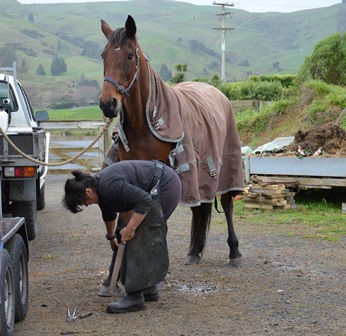
Manicure, shower and massage for two of our mares yesterday as we moved them from one of our “virtual farm” paddocks to another.

Who is this rather handsome looking mare getting a hoof trim and wash by owner Kym Kearns?

It’s 26 year-old Isa Countessa (Krissy) the much loved dam of Sun Isa and so  grandam of Flying Isa (the colt who won the Australasian 2yo Trotters Breeders Crown in 2011).

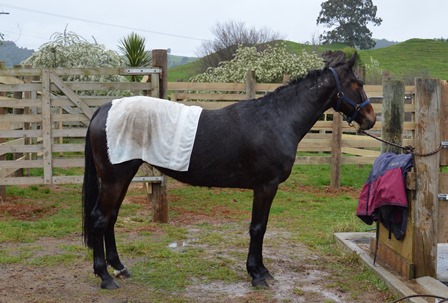
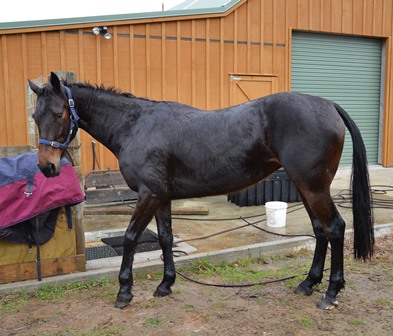
The bottom two photos are of my mare The Blue Lotus, whose pedigree was shown in the last blog.  Her first foal took a lot out of her, and it has been a work-in-progress to get her condition and confidence back up. She’s feeling a lot better now that she’s got her figure back!

Isa Countessa

26yo Isa Countessa gets a manicure

Isa Countessa mare

Isa Countessa at Isa Lodge

The Blue Lotus mare

6yo mare The Blue Lotus enjoying the TLC at Isa Lodge

The Blue Lotus mare

The Blue Lotus aka Lottie wants a bit more attention please!

Looking after your mares is such an important part of breeding. You cannot expect them to deliver unless you put the time, effort and nutrients into them – or make sure good people are doing so on your behalf.

Our mares have been very good to us, and in return we are good to them.

Read Full Post »

In my last blog I looked at the pedigrees of some of Shadow Play’s first racing age crop winners in North America, and found that he appears to enjoy mares carrying plenty of the same good genetic influences that he has himself.

Now I’ll take a quick look at what mares he received in his seasons so far in New Zealand and specifically the cross with my mare The Blue Lotus who is Grinfromeartoear-Zenterfold, and therefore a half sister to the very good pacer and now sire Tintin In America.

Any analysis/comments for the Australian mares would be interesting – send to me, or add as a comment.  Richard, my Australian colleague, has also done analysis of the maternal families that Shadow Play’s North American winners have come from so far. That’s not an area I know much about at all so I will bring you more of his comments in another blog.

Shadow Play has had two crops in New Zealand to date so they have (as at 1 August) just become 2yos and yearlings.  On HRNZ database it records 27 live foals (19 in the first year and 8 in the next) although I can count only 25 foals listed as progeny.

Pedigree-wise, Shadow Play would be playing in quite a different pool of broodmares than in North America.

Artsplace mares are scarce as hens teeth here, so the Artsplace connection would come through his sons, not his daughters, unlike the rich tap of Artsplace mares he has accessed in North America.

New Zealand also does not have so much No Nukes influence in our maternal lines.  Probably one of the most successful sires in New Zealand who have No Nukes as a damsire is Washington VC, a son of Presidential Ball who flies under the radar for many of us because he is basically only available to lower South Island/Southland mares – he is the sire of very good horses like Imthemightquinn, Foreal and Georgetown. We’ve had Riverboat King with a No Nukes damsire and there are a decent number of Riverboat King mares around, but none so far as a match for Shadow Play. Live Or Die is from the No Nukes/Oil Burner sire line and carries Breath O Spring as well, but as yet no Live Or Die mares have been matched with Shadow Play here. Tinted Cloud, the In The Pocket son, has No Nukes as his damsire and Race Time-Breath O Spring on his maternal line, and there is one match so far between a Tinted Cloud mare and Shadow Play – and of course that will have the Direct Scooter double up as well. For many others the No Nukes connection will be as the sire of Western Hanover, which brings in a probably too close a cross for most breeders with Shadow Play being a son of Western Hanover sire The Panderosa. (I think in Australia there will be many more mares with Artsplace as their sire and with No Nukes in their pedigree).

However New Zealand mares do have a lot of other things to offer Shadow Play that he seems to enjoy – plenty of Adios, plenty of Tar Heel (who of course crossed so well with Adios himself and traces to Rose Scott, the full sister to Scotland).  Plenty of other links to Old Maid/Spinster/Scotland blood. A couple of our early sires U. Scott (a son of Scotland) and Light Brigade (a son of Spinster) tap into this fantastic old blood, and yet another very good sire and damsire here Bachelor Hanover in the 1970s was a son of The Old Maid.

Shadow Play’s damsire is Matt’s Scooter, and Matt’s Scooter is about the only Direct Scooter influence you find now in North America. New Zealand mares can also offer Direct Scooter througha different stunningly  successful branch  – In The Pocket, his mares and his successful sire sons, and also through some other sons of Direct Scooter who stood here (mainly OK Bye and to a much lesser extent Deal Direct and Tinted Cloud). In The Pocket brings both Direct Scooter and Tar Heel into the picture up close.

Our other hugely influential sires of recent times – Holmes Hanover and Falcon Seelster – also have pedigrees that have are interesting with Shadow Play. Holmes Hanover bring Tar Heel , Adios and The Old Maid, and Falcon Seelster brings Warm Breeze (Shadow Play’s grandamsire) and therefore Good Time and Breath O Spring/Scotland/Spinster, and also a couple of doses of Adios.

Shadow Play is not the only sire that has or will relish the way New Zealand mares can deliver these influences!  That is one reason why our breeding stock have been well regarded – their genetic structure is often deep with quality.

A quick look at the mares Shadow Play has had here to date indicate that Shadow Wave is also present, in spite of a lack of No Nukes. Mares by Elsu, New York Motoring, Artiscape and Pacific Rocket are all bringing Shadow Wave in via the dam (Peaches N Cream) of New York Motoring or his full brother Happy Motoring, and in future we have an increasing number of commercial mares who have the Shadow Wave-Golden Miss combo in their maternal lines.

None of this will necessarily give the mares a “golden cross” with Shadow Play, but it is food for thought for breeders. As always, type, temperament and Shadow Play’s own ability to be a successful sire must be there as well. The jury will still be out on that for another year or so. It is interesting that he got so few mares here to date, and that the link to our mares (particularly Direct Scooter and Warm Breeze connections to In The Pocket and Falcon Seelster) were not picked up on so much in the marketing or by breeders so far.  His first crop success in North America will probably deliver him a much better book this season.

The Blue Lotus match

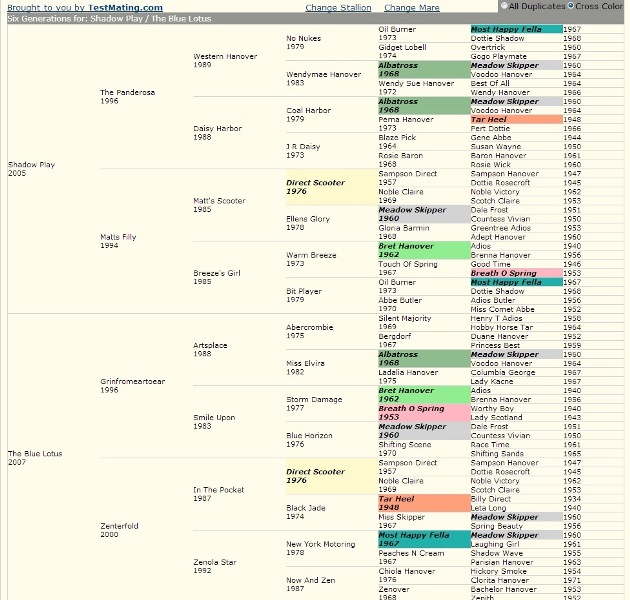
OK now to my own mare. You can use Tesio or whatever system you have to look more closely at this if you want, but here is a snapshot.

The Blue Lotus is a Grinfromeartoear daughter of Zenterfold (In The Pocket), and a full sister to the promising Destination Moon. So she carries heaps of the blood we have seen in Shadow Play’s most successful foals. The resulting foal would also be 4×4 to Direct Scooter – that’s the closest cross.

Here’s Richard’s summary and comments on the match:

Direct Scooter is 4 x 4 and reinforced, which is great. She has some great old Spinster type influences fairly prominent on her strong heart lines that will connect to Shadow Play, quite nicely. Shadow Wave is further reinforced with a couple more doses. The mating also brings Albatross into play quite strongly and is reversed 5 x 5 , I think this is a very important connection. Sampson Direct’s kid sister, Dottie Hal also comes into the mix to reverse the Sampson Hanover affect. I really think that Lottie’s speed influences are coming from the Direct Scooter/Spinster aspect of her pedigree and a mating with Shadow Play could see another dose of extreme speed injected into the foal from a totally different and new influence, NO NUKES.

For me, genetically this feels a very balanced match which reinforces quality genes rather than outcrossing to completely new blood. I like the presence of siblings Touch Of Spring, Race Time and Storm Damage all bringing Breath O Spring into the equation. And Zenterfold brings in The Old Maid via Bachelor Hanover.  There are 4 duplications of Shadow Wave in the background, two via Oil Burner in Shadow Play’s pedigree, and 2 via other lines (Shifting Sands and Peaches N Cream) in The Blue Lotus’s pedigree.

The Blue Lotus is a good sized mare and was a tough, gutsy type of race horse. She has been heart-scored and is well above average in that department.  Although she took a 1.56.6 record, I am looking for speed and athleticism to add to her, and that is also what Shadow Play may offer.

Her first foal is by Bettor’s Delight for The Blue Lotus Syndicate and will be entered into the 2014 yearling sale at Karaka in the Breckon Farms draft.

Shadow Play – The Blue Lotus cross

Shadow Play x The Blue Lotus

Read Full Post »

Looking for ‘clicks’ in a new sire can be dangerous.  And even hindsight can be tricky with established sires. Mainly because we focus our analysis of the pedigrees on a sire’s top foals rather than say 20 of his average foals or perhaps his bottom 20 foals that never succeeded as racehorses.  It’s something I’d like to do one day.  Or if it has been done, i.e. a sort of “control group’ experiment, I’d be very interested to know about it.

But having said that, I’m going to focus on the pedigree of Shadow Play’s American winners in this blog.

Richard, one of my blog friends, has been conversing with me about Shadow Play. This is a sire that is making a bold debut in North America and has a pedigree that could match well with some of our mares.  I’ve been seriously considering him for my Grinfromeartoear mare, and Richard is doing the same for his Bettor’s Delight mare.

I’ve looked at the pedigrees of 17 of Shadow Play’s American winners to date. I haven’t done detailed analysis, just a quick look to see if there anything that stands out. (Note: Names and some additional information on these foals has been added to the bottom of this blog, 30 July)
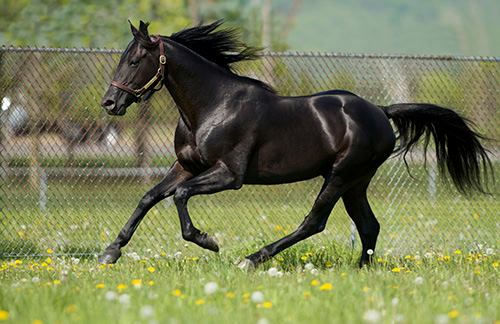
Shadow Play

Shadow Play – looking for Shadow Wave

Two things stand out for me:

  1. Of those 17 winners,  6 have Artsplace has the damsire (another 3 have Artsplace as the grandamsire). And yet I’m not sure the volume of Artsplace “nicks” tells us too much yet, after all, the proportion of Artsplace mares available to a promising sire will be high and a high speed sire from the Western Hanover line would be flagged as a good match for those breeders who want that Artsplace/Western Hanover line cross.
  2. This is one of those sires/families that loves getting “more of the same” blood and specifically an uncanny amount of doubling up with No Nukes and Shadow Wave.

It’s that 2nd point of interest I want to focus on, because it is intriguing. While Shadow Wave is an influential sire, he’s not an especially common one. In commercial families he is present usually via No Nukes/Oil Burner or Big Towner, or in the best of the Golden Miss family.

But in the pedigrees of these 17 mares, Shadow Wave comes in from a range of directions.

The total number of times Shadow Wave appears in those 17 dams’ pedigrees is 22  23 times.

10 of those are via No Nukes.

That leaves another 13 Shadow Wave connections, 4 of which are via Big Towner.

All Shadow Wave’s credits except one are as a damsire.

In 7 of those 17 dams, Shadow Wave appears TWICE in their pedigrees.

And of course that’s not counting the fact he appears twice in Shadow Play’s own pedigree. So 7 of the 17 winning foals have Shadow Wave 4 times in the first 7 generations.

What makes this unusual is that Shadow Wave is not a sire like Meadow Skipper, Cam Fella, Albatross who had much larger numbers of foals and became sires of sires which means they appear quite often in these sorts of numbers in the pedigrees of horses.  Shadow Wave was not a ‘go to’ sire. He had a total of 524 foals over 14 years at stud, many of them in his last few years.  Just to compare, Meadow Skipper had 1267, Albatross 2642, Abercrombie 1816 and Bret Hanover (like Shadow Wave a son of Adios) had 1724 foals.  Artsplace must be close to 2000. Shadow Wave left very few sons who became sires, and none were particularly successful. So he is popping up almost entirely as a damsire.

Very interesting.

The pedigrees of these 17 Shadow Play foals are packed with goodies, certainly packed with the influence of Adios through two very different sons. Shadow Wave, like Bret Hanover and Adios himself, like having ‘their best blood returned to them’, as they say.  Shadow Play seems to be carrying on that tradition.

Those of you who know my blogs will recall that I sometimes use cooking as a way of describing my approach to breeding and pedigree analysis.

In terms of recipes, I see these Shadow Play foal pedigrees as a “chicken three ways” sort of dish or a dessert that uses white chocolate mousse, dark bitter chocolate base and grated chilli chocolate on top. Initially you sort of think “oh, way too much of a good thing.” Then you start to eat it and think “Yum”.

Shadow Play’s maternal line includes Warm Breeze (Bret Hanover-Touch Of Spring) which brings in Good Time-Breath O Spring and the classic Old Maid/Spinster/Scotland connections. So does No Nukes’s maternal lines through Tar Heel and Gogo Playtime.  Shadow Play will enjoy getting those influences returned from the mares he gets – .

It works both ways – those mares with No Nukes/Oil Burner/Shadow Wave/Adios in their pedigrees seem to love getting what Shadow Play offers.

And look at the great families Shadow Play is getting to play with:

  • Two of his progeny (Shadowbriand and Shark Festival) are out of mares who are from the wonderful Rodine Hanover family (both those mares are from the No Nukes mare Romanticize).
  • Arthur Blue Chip’s dam is a grand-daughter of Tarport Cheer.
  • Shadow Place’s great grandam Loving Proof is, I think, a full sister to Camtastic.
  • Play It Again Sam – that maternal family is one I mentioned in my last blog about the Meadowlands damsires – He’s from a daughter of Orchid Island, who is a full sister to Island Fantasy and a great producer.
  • Reasonable Force – the grandam Shady Katie is a half to the great mare Shady Daisy (by Falcon Seelster).
  • Of interest to NZ breeders, Book Babe’s greatgrandam is No Secrets (Oil Burner-Treachery) who is also the greatgrandam of Attorney General, who stands at stud here, and has a very talented 2yo filly Imhisdaughter (from an Artiscape mare) starting her racing career. Attorney General is a son of Falcon Seelster. Falcon Seelster is of course by Warm Breeze, who features in Shadow Play’s maternal pedigree. Falcon Seelster also appears as Imhisdaughter’s greatgrandam. Of course Imhisdaughter’s damsire Artiscape carries Shadow Wave through Happy Motoring.
  • That’s just some of them I can spot at a glance, I will have missed others.

It sure helps if a sire can get some well bred mares that bring something to the table – especially if they come with the goodies he likes.

All of the above makes me think again about whether I can resist the match with The Blue Lotus, as that pedigree would have some of the elements I see producing good results here.

I’ll look closely at that in my next blog soon, as well as some comments from Richard “across the ditch in Australia”, and a look at the very different overall broodmare pool that Shadow Play will be accessing in New Zealand and also in Australia.

Additional information/names

The 17 winning foals of Shadow Play I looked at are: Book Babe, Shadowbriand, Alibi Seelster, Shark Festival, Reasonable Force, Brookdale Shadow, Lady Shadow (grandam is by Dallas Almahurst, a full brother to Oil Burner), Play It Again Sam, Performing Art, Shadversary, Twin B Spy, Skippin By, Shadow Place, Courageous C, , Yoselin Seelster, Nefertiti Bluechip, and Arthur Blue Chip (the only one whose dam doesn’t carry any No Nukes/Oil Burner/Shadow Wave in her pedigree).

The damsires are: Artsplace (6, plus 3 as grandamsire), Cam’s Card Shark (3), Bettor’s Delight (1), Jate Lobell (1, plus 3 as a grandamsire), Armbro Operative, Camluck, Blissful Hall, Life sign, Intrepd Seelster, Abercrombie (all 1).

No Nukes and Big Towner appear 2 times as grandamsires.

Confessions of a Shadow Wave lover. Yes, it’s true, I love this old guy. And for good reason. Check out my blog about Shadow Wave and his influence as a damsire and in my own mare’s family.

Read Full Post »
« Newer Posts - Older Posts »