Feeds:
Posts
Comments

How are the results shaping up?

The Australasian sale at Karaka was very mixed – highs and lows in prices, a smaller bench of NZ buyers and some good support from Australian buyers. As noted in other publications, a high “passed in” rate which may be vendors adjusting to the new Reserve system or just not willing to let well bred fillies (in particular) be devalued because of the current market. Many of those passed in will translate into private sales of course, but it was very noticeable during the auction itself.

The Bettor’s Delights held up well although there were still 11 out of the 42 sold going for under $20,000 – although often you could see why. I don’t mean to sound critical saying that, but buyers in this economic climate will always be picky about families and type, and the smaller Bettor’s Delights found little interest if they were a finer type or from families that had little black type or current eye-catching performers. Lesson? You can try to upgrade families by going to excellent sires, but any positive results may appear later on the racetrack rather than earlier in the auction ring. So you have to be ready for a patient and expensive process.

Art Major had a flat sale, with many not meeting their Reserve price. Enough NZ buyers and trainers are still holding back from all-out endorsement of this sire to pose questions for breeders – is the market going to change for next time? Will Art Major’s results on the track next two seasons convert everyone into fans? And are the rumours about “leg issues” based on anything or just a few isolated horses and a lot of gossip? And the talk about” “some just don’t want to be there” – well, isn’t that horses? Even 50% (approx) of Christian Cullen’s progeny were not winners.

Mach Three had a great sale, and congratulations to breeders who have stuck with him. His 2yo stock started to show up again at just the right time. He’s got some older showy runners performing well right now. Overall, the Mach Three yearlings looked decent sized, athletic types with longer barrels and a real presence about many of them.

The trotters were up and down – with only very few representatives it is best to wait for the results from Christchurch before doing the stats on them and the newer pacing sires.

Personally?
Isa Lodge had a very pleasing result with Kym’s Angus Hall colt (lot 69) selling to Lincoln Farms for $42,000.

All the results of the Australasian sales are now posted on PGG Wrightson’s Sale of the Stars website
Christchurch results are being posted as they happen.

Keep in mind a general idea of breeding costs. Of course that depends on how much you can carry yourself and how much you have to pay commercial rates for various breeding expenses or carry overheads on a property etc. However let’s take a figure of $10-15,000 for foal to yearling sales costs, to which the sire’s service fee (which might be discounted or not) needs to be added. So in very general terms, a vendor really needs $20-25,000+ to cover costs/fees and get a return on such a risky investment. Those able to do much of the foaling, raising and preparing work themselves on their own property will have a lower point of breaking even and starting to get a profit, and those selling larger numbers can spread the risk across their draft. But $20,000 is a “ballpark figure” for those paying commercial costs and going to ‘sales type’ sires.

Just a few observations and some quickly calculated stats. Remember that averages hide a wide range – delighted vendors doubling their money, many just covering costs, and some gutted and selling at a significant loss.

Overall NZ trends will only become apparent after today and tomorrow’s Premier Sale days in Christchurch.

Bettor’s Delight

51 lots offered.

42 sold (82%)
Buyers total spend on the day: $1,690,000
Price range $3,000-$210,00
Average price: $40,238
Average price without top lot: $36,794
Average price without top 3 lots ($100,000+): $31,794
Number of lots <$20,000 = 11 (26% of lots sold by auction)

Art Major

22 lots offered.

13 sold (59%)
Buyers total spend on the day: $312,500
Price range $11,000-$50,000
Average price: $24,000
Number of lots <$20,000 = 7 (53% of lots sold by auction)

American Ideal

13 lots offered.

8 sold (61%)
Buyers total spend on the day: $177,000
Price range: $5,500-$82,500
Average price: $22,000
Average price without top lot: $13,500
Number of lots <$20,000 = 6 (75% of lots sold by auction)

Mach Three

15 lots offered

13 sold (86%)
Buyers total spend on the day: $475,000
Price range: $8,500-$120,000
Average price: $36,576
Average price without top lot: $29,583
Number of lots <$20,000 = 3 (23%)

Christian Cullen

16 lots offered

11 sold (68%)
Buyers total spend on the day: $242,000
Price range: $7,000-$65,000 (but one passed in for $97,500 with reserve of $100,000)
Average price: $22,000
Number of lots <$20,000 = 7 (63%)
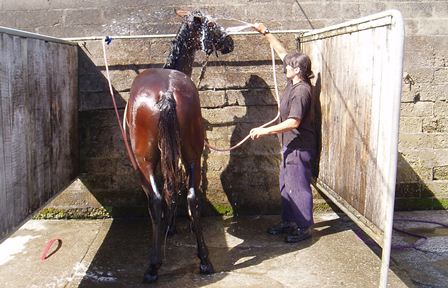
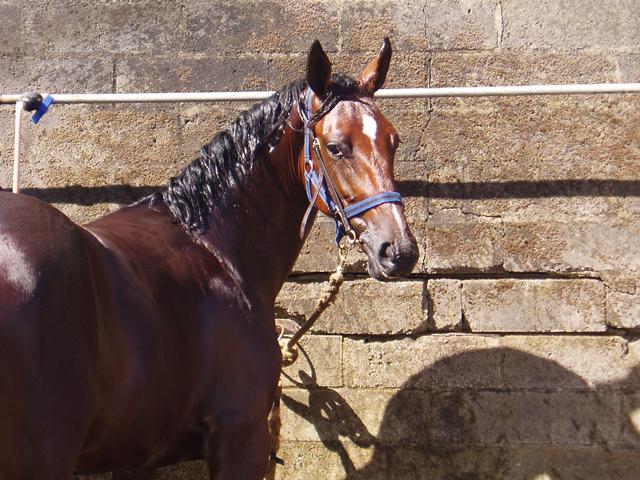
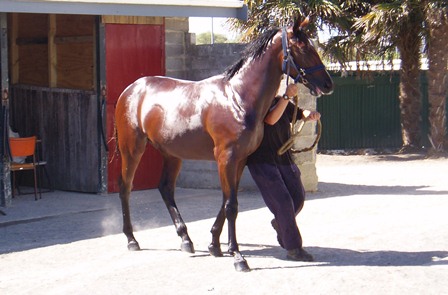
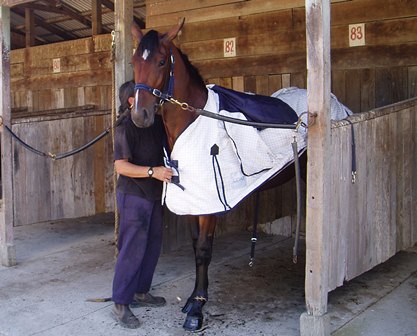
Angus Fogg Lot 69 is on his way to Karaka sales complex.

Here are some photos of Kym Kearns giving him a wash before loading him on the float for the 2-hour trip from Cambridge to Auckland.

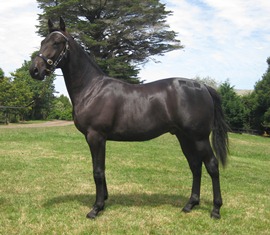
He’s grown into a lovely strong type, and will end up being a bit bigger than we initially thought. A really handsome fella with a lovely personality. He’s keen to get started!

I’d like to wish all breeders and vendors a really good sale. It is a nervous time, and takes less than 5 minutes in the ring to bring a result for many months of hard work and tender loving care.

Isa Lodge proudly presents Angus Fogg (Angus Hall x Sun Isa), half brother to Flying Isa.

Angus Fogg yearling

Shower time!

Angus Fogg yearling

Aren’t I handsome!

Angus Fogg yearling

On his way to a towel down.

Angus Fogg yearling

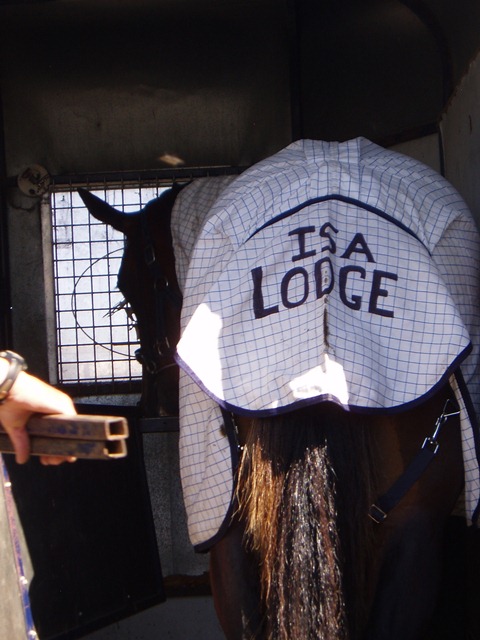
Smart new jacket

Angus Fogg yearling

Loaded and ready to go.
See you at the Sales!

Just a week to go before the New Zealand yearling sales start.

What are buyers looking for?

Thanks heavens, it varies!

Some big buyers who will not even inspect yearlings unless they are by one of a handful of sires they like, while others go entirely on type.

Many have strong connections with a  particular family that has done well for them, because they feel familiar with its strengths and weaknesses.

Here are two interviews from the APG website with Tim Butt and Andy Gath which give some insights into how they go about selecting a yearling.

Yearling selection – Tim Butt

Yearling selection – Andy Gath

Have a look at this filly bred by Brett Coffey – what a lovely type!

She’s the one in the foreground.

She’s by Tintin In America from the 6-win (1.57.4) Live Or Die mare I Am Special.

She reminds me a lot of Tintin when he was a similar age, especially that head and the eye!

Filly by Tintin In America filly

Tintin In America x I Am Special Filly photo from Brett Coffey

Nevele R tell me that Tintin In America got 54 mares this past season, compared to 40 in his first season, and the type he is leaving is exciting.

He deserves quality mares like I Am Special, who won the WASBA Breeders Stakes, and gained 11 places as well as her 6 wins.

I’m interested in hearing from breeders of real quality mares, particularly by Live Or Die, Badlands Hanover, Grinfromeartoear, Soky’s Atom, Holmes Hanover and Falcon Seelster, and younger mares from top sires like Art Major and Bettor’s Delight who would consider putting their mare to Tintin In America this coming season. I would love to see him get some really top mares.

Please contact me if you would like to discuss:  bee.raglan@xtra.co.nz

He was a racehorse with freakish acceleration and attitude, and the strength to hold his phenomenal sprint further and further as he matured.


Calling for expressions of interest

Breeding can be rewarding and fun!

Would you like to join others in a syndicate to breed a top yearling for the sales?

I’m proposing a breeding syndicate for 2013/14 season to breed a commercial foal for the 2016 yearling sales, using my young well-bred black type mare, who is a half-sister to Tintin In America.

Are you

  • Keen to get involved in breeding standardbred horses – or know someone who might be?
  • Love breeding but struggling with the costs and risks?
  • Or maybe you don’t have a commercial mare?

I want to do something positive to bring in new people to breeding and help current small-scale breeders stay involved. Rewards, if any, will be shared by all syndicate members, as will the risks.

I am looking for 15-plus syndicate members. Preference will be given to those who are

  • new to breeding standardbreds, or
  • have been out of breeding for some time and looking to get involved again, or
  • are small-time breeders who are struggling to stay involved and enthusiastic, or
  • breeders who have a small financial interest in breeding already, but want to learn more and scale up their operation in future.

Although the syndicate would be North Island based, if sufficient numbers in the South Island expressed interest there may be a way to breed from two mares, one in each island.

One affordable up-front payment. No weekly or monthly payments.

This is an opportunity to have a positive experience in breeding by sharing the risks and rewards of breeding and have some fun and learning along the way.

If you are interested, contact me (Bee Pears) on bee.raglan@xtra.co.nz  or leave a comment on this page by 15 March 2013- please give an indication of your current involvement in breeding.

More details on the b4breeding page Breeding Syndicate Proposal (top of my blogsite home page)

In my last blog I looked at close breeding from imported American lines by Charlie Roberts for Lot 37.

Now I want to focus on a lot that is a good example of outcross breeding from New Zealand lines by Bryan Macey for Lot 48 – wonderfully named Local Yokel.

Kiwi Outcross

Local Yokel

Lot 48 Elsu colt, Local Yokel

Lot 48 is a black colt by Elsu (Falcon Seelster-Interchange) from Rare Class (In The Pocket-Rare Gift) bred by Brian and Marilyn Macey.  You finally find Meadow Skipper 5 x 5,  through Interchange (New York Motoring-Most Happy Fella, sire-sire), and through In The Pocket (Black Jade-Miss Skipper, dam-dam) connection.  He’s also 5×5 to U Scott.  The closest double ups he has are Overtrick at 4×5, and Tar Heel at 6x6x4.

The Rare Class family is  based on a solid Kiwi maternal line with some upgrading for speed lately via In The Pocket, the sire of Rare Class.

Line breeding, Bryan says, only works well when you are in the position to  breed back to very good sires or families. Otherwise outcrossing is the best option.

Like Charlie Roberts, Bryan Macey is no spring chicken – but with age comes experience and the willingness to back yourself.

This is a family that pops up some very nice horses. Matched by the Maceys to Presidential Ball, the mare has produced multiple winners Presido,  (My) Sound Of Thunder and  Jambo Emali.  Ace Of Spades was bred from Rare Class’ dam, and NZ Cup winner Homin Hosed from the 3rd dam.

The choice of Elsu as the sire of this colt is interesting. Bryan and Marilyn liked Elsu as a racehorse and respected his outstanding record of performances.

You have to say that Elsu is finding a niche as a sire of later developing, honest, good value bread-and-butter horses, but as Bryan points out, it was harder to tell which way the sire was going two years ago when the breeding decision was made. Lot 48 is one of the very few Elsus in the yearling sales, and Elsu is not really going to be a “yearling sale sire” in future – but he still has the ability to still throw up some very, very good horses of a stronger, tough type.  He’s there to sell, says Bryan.

This colt will have admirers on type and the strength of his maternal family. Look at the photo  – he’s probably not going to be a natural 2yo speed demon, but he has a lovely long barrel. Bryan is the first to say: he’s in the middle of some growing and got more growing to do.  He has the two most recent fillies from the mare in training at the moment, both of which are working up well.

Lot 35 trotting filly

Megaspeed

Lot 35 Megaspeed

The Maceys have another lot in the sales that I’d like to mention – Lot 35, the only filly by Angus Hall in the total NZ yearling sales. I’ve already covered the Isa Lodge entry, a colt by Angus Hall (also from an Sundon mare), and Bryan describes this filly in similar terms to Kym Kearns’ description of her Angus Hall colt – medium size, solid/strong, correct. You can see from the photo that she looks a very nice type.

Angus Hall’s frozen semen fee that year was not cheap, and I have respect for those breeders who grabbed the opportunity in spite of that. He is a very classy and proven trotting sire in North America who deserves a go with our good mares – and in the total sales the three Angus Hall lots are from three top quality Sundon mares.

Looking through the 2013 New Zealand yearling sales catalogue, there is a real mix of outcross, close bred and in-between pedigrees on show, which is great. It’s hard to tell if they reflect what breeders are deliberately trying, or more a match based on other preferences (commercial status of the sire, type, previous siblings etc)  that just happened to end up like that.

There are three yearlings, all fillies, from the wonderful USA Lismore family in the Woodlands draft (on behalf of Charlie Roberts). One of which has a very unusually close double up (in this case to the sire Western Ideal). Inbreeding is not something we often see now in New Zealand, so I was interested to find out what was behind it.

In this blog I’ll look at those three lots, and in the following blog I’ll check out an example of the other extreme, Lot 48 at the Australasian yearling sale, an outcross with a strong “colonial” flavour bred by Bryan and Marilyn Macey.

Line breeding US style

Charlie Roberts of Woodlands Stud fame had the opportunity to buy two affordable fillies from the wonderful Lismore family some years ago – Lismurray with a broken shoulder and Lisgarden with a slightly crooked leg – and bring them to New Zealand.

Lot 37 is a daughter of Lismurray called Lisconnie who is a Western Ideal mare. Charlie Roberts has bred her to Woodlands’ American Ideal, who of course is a son of Western Ideal. So that makes Lot 37 2×2 to the sire, and double ups so close on the siring line are unusual these days. Lisconnie’s previous foals were by Artsplace (I’m) Lisart now racing in Australia, and then by Bettor’s Delight for Red Sky Night who has just qualified at Cambridge this month.

Charlie Roberts’ reasoning behind selecting American Ideal as the next sire for Lisconnie is simple – if you are line breeding, breed to the best stallions in the pedigree and to the best stallions available. Not surprisingly, he rates American Ideal and Bettor’s Delight as the best.  He believes there is no problem about breeding so close (what would generally be regarded as inbreeding) so long as the horses are the best quality.

It is an interesting thought, and one that has thrown up some exceptionally good results in history – but also some disappointments. My own concern would be more about type.  In Lot 37 the pedigree is packed with horses that can leave types that we don’t recognise as sheer speed influences – Abercrombie, Cam Fella, Western Ideal himself can tend to leave bigger strong, tough types. However both the female lines have Albatross, and American Ideal does throw Matt’s Scooter into the mix.

It’s a risky breeding that Charlie Roberts is very relaxed about, and I guess he’s in a better position than many of us to experiment if he so chooses.  As they say,  the proof of the pudding is in the eating. And some of us may end up eating our words, while Charlie is eating the pudding!

There was a forum thread about this particular foal and similar close breeding later last year (although I don’t agree with this foal’s cross being described as 2×3 rather than 2×2 – if Tesio says 2×2 that’s good enough for my small brain!)

Lot 45 is Lisdargan’s filly also by American Ideal. Lisgarden is by The Panderosa, which makes this foal 3×3 to Western Hanover, again on the siring lines. And again, you get the double up of Albatross on the female lines.

And then finally Lot 53, a filly by Bettor’s Delight from Lismurray, who is a Presidential Ball mare, so that brings a 3×3 to Cam Fella, again on the siring lines. The filly will be a full sister to Lisharry who is now pushing the $70,000 mark in combined earnings here and Australia.

These lots all have a very strong American influence, of course.  As I said before, Charlie Roberts has followed his belief in going to “the best” and went to the best NZ bred sire of the time, Christian Cullen, with two of these mares but the results have been a bit disappointing to date, he says.

While the Lismore family is a fine one, we only know it here  from Lislea and Lis Mara as sires, who have not yet set our mares on fire although Lis Mara needs to be given a bit more time. The NZ families Charlie is creating from the two fillies he bought are the other connection to that family. There is plenty of room for the family reputation to improve in this corner of the world, and I think Charlie Roberts is enjoying that challenge.

Great blog to follow

Heads up about this blog from Kentucky stud Diamond Creek Farm owned by Adam Bowden and his father, Chris. The farm arrived on the Standardbred scene in 2005  and in this short time the farm has bred, or raised and sold, such top stakes winners as Archangel, Vertical Horizon, Valentino and Big Rigs and campaigned top stakes colts and fillies, such as Ultimate Cameron, Swan For All, A Rocknroll Dance, and Naughtytiltheend. The farm’s yearlings are sold at the Lexington Selected and Harrisburg sales each fall.

Adam writes a very good blog which covers the day to day events on the farm and the progress of his yearlings through to sales, as well as his thoughts on other issues around breeding.

I really recommend it as a well written, interesting read.

You can find their website at:

http://diamondcreekfarm.com/

which has a blog summary and link, or straight to the blog (which is called Inner Workings of a Breeding Farm) at:

http://innerworkingsofabreedingfarm.blogspot.co.nz/


I’ve blogged a few times now on the topic of the current dominance of Bettor’s Delight as a pacing sire (and probably in future as a broodmare sire).

He’s there on his own merits – but the combination of declining mare numbers and lack of siring competition means the situation is not healthy for our overall breeding industry if it carries on too long.

It’s not a “perfect storm” but it is a patch of tricky weather conditions that we need to negotiate our way through. Because I don’t believe that “market forces” will necessarily make the changes soon enough or in the best strategic long term interest of the industry.

I believe there are several solutions, and perhaps best in combination:

  • Look at some form of voluntary or compulsory industry limit of sires’ books.
  • Use pricing at the top end to manage demand, (done for Christian Cullen even though Ian Dobson got a lot of flack for it),  as well as at the lower end to encourage demand.
  • Reduce the number of sires on offer, so that good commercial sires can get a decent book of mares.
  • Ride out the trend, knowing we have had it before (e.g. with Sundon and perhaps Gee Whiz before him in the smaller trotting breeding pool), but take responsibility as individual breeders to play our part by being more adventurous in our choice of a sire.
  • Use some agreed limits on yearling sales entries overall from individual sires to avoid over-supply at our showcase market.

Many of these measures need the cooperation of the main industry players and certainly the studs – and some of them will already be making adjustments given the situation all of them, bar Woodlands, find themselves in this year – competing for a smaller number of mares with a larger range of sires in an environment where one sire is taking a significantly large portion of the pie. I’m talking about the significant New Zealand and Australian studs. This will have been a very difficult season for them.

We are spoilt for choice with sires. It seems almost criminal not to give some of these superbly performed and bred hunks of fertility the chance to have a go as a sire. But the reality is, we just don’t have the number of mares to give them all a real good chance. A new commercial sire will need at least 50 live foals to even start making his mark.

I’m not suggesting some compulsory limit on sire numbers, but a recognition that studs may well have been cutting their own throats by throwing so many new shuttle and frozen semen sires at breeders over the past 2-3 years.

What I do want to see is proven sires remaining well supported, and a smaller number of new sires offering a greater variety of bloodlines and types, rather than duplicating.

Sutter Hanover as a racehorse

Sutter Hanover warms up before the 2007 American Cup where he was placed 2nd.

And then I would love to see more breeders really thinking outside the “most in demand/best to the best” sire – being willing to try some of the new sires we do get. I was delighted, for example, when Alabar bought Sutter Hanover to New Zealand, but Kiwi breeders failed to get interested and he was moved to a niche in Australia. His sire line (Dragon Again) and maternal family (tracng back to The Old Maid) offered us some real choice and would have nicked well, I believe, with many of our mares. And on type, his conformation and reach was also something quite different. Some of the foals he  had here are quite clearly stamped by his looks and way of going. There’s a few of them already popping up promisingly, but maybe too late for Sutter Hanover to gain any traction again unless he fires brilliantly over in Australia. He would be a different sire I would have considered for my top mare.

The best short term solution is to have a voluntary limit on book numbers. I think 150 is reasonable. It is done overseas. It doesn’t have to be permanent.

And maybe less choice of sires (in numbers) but more choice (in types and bloodlines).

Regardless,  it needs to be looked at and actioned quickly, before we get into another breeding season. It will involve people looking outside their immediate commercial needs and thinking of the industry as a whole. Cooperating, even compromising. I won’t be holding my breath.

Princess Della is a miracle in today’s breeding world. Her pedigree includes one of the the last flickers of the Globe Derby colonial siring line in New Zealand. But she has turned that flicker into a bright light of success.

And that is thanks to the confidence that Don McRae and his sister Mrs Wendy Blackie have had in the mare.

The mare hasn’t made it easy – she was a “bit of a bitch” at times, says Don, but a big jet black bitch at 16.3 hands who has gone on to re-start a family from a maternal line with some very nice sires – Princess Della’s grandamsire was Armbro Del and her great-grandamsire was Bachelor Hanover – but overall a maternal line which hadn’t shown much for a few generations.

Princess Della has changed all that. The result in 2013 is some decent black type on the top part of the page of Lot 74 at the Premier Day 1 yearling sales, a filly called The Enforcer by new trotting sire Skyvalley (Muscles Yankee-Chiola Lass) who was a double Breeders Crown winner as a 3yo and 4yo.

Princess Della is a trotting mare by Last Lord (by Lordship), a little known stallion who sired only 30 live foals  from 1987 to 1995, for just 2 winners.

Much of the breeding interest lies in the fact that Last Lord is the tail end of the colonial siring line known here mainly as the Globe Derby line, which originated from a son of Hambletonian called Strathmore. More of that at the end of this blog.

Don McRae’s father owned Last Lord and so Don knows him well. He was a big jet black horse (where Princess Della got her looks from) who was given a fairly scanty serving of mares to make his mark as a sire and breeders who perhaps lacked attention to the subsequent foals, says Don.  So his statistics need to be taken in that context.

However one of Last Lord’s progeny was Princess Della, bred by C M Hanna and then bought by Wendy Blakie who wanted a Last Lord foal and was advised by brother Don to chose the one from an Armbro Del mare.

Princess Della had only 2 wins and 7 places but she was a better racehorse than that indicates and would have gone further except for soreness. Don McRae she also “had a bit of dirt, was a bit toey”. She got a 2nd in the NZ Trotting Stakes and that was enough to be awarded as 1992-3 Trotting Filly of the Year.

There were some big offers made for Princess Della, but Wendy Blackie wanted to keep her as a broodmare.

What a great decision.

And what an opportunity taken, as Don and his sister Wendy have made very astute and modern breeding choices for such a ‘colonial’ bred mare. It has paid off, as the catalogue page shows.

Kyvalley Mac, son of Princess Della

Kyvalley Mac, very good son of Princess Della

Princess Della is now a 23yo (note that, Don, you think she is only 21 because you look after her so well and she looks younger!)  As a broodmare she has had 9 foals and 5 winners, and three of them – Rare Opportunity, Dealornodeal and Millions To Spare are currently racing in New Zealand. She seems to leave tough, consistent types with a bit of speed – and the best of them was really good, Kyvalley Mac, who got placed in many group races in Australia and ended up with 12 wins and over $160,00. Three of her other sons have now won over $90,000 (Just A Cracker, Just Incredible and Dealornodeal).  Her most recent foal to the track is Millions To Spare (by Majestic Son) who has just got his first win with only two starts on 4 January this year.

Don and Wendy have chosen sires for Princess Della which include very good proven sires and new imported sires, some at fairly high stud fees when they were first available here. Her consorts have been Sundon (Just A Cracker and Just Incredible), Earl (Kyvalley Mac), Dr Donerail (Off The Rails who showed a lot of talent but injured himself badly before racing), Dream Vacation (Dealornodeal who had an outstanding 4 and 5yo season, particularly in Australia),  Pegasus Spur (Rare Opportunity), and Skyvalley (Lot 74 The Enforcer), and the old mare is back in foal to Muscle Mass.

When a mare leaves consistently talented horses from such a range of sires, I take notice. That is a sure sign of a mare who brings a lot to the breeding table, and takes charge of the negotiations when she gets there.

Lot 74 is described by Don as being a beautiful big filly (Skyvalley was not a big sire, but one who impressed Don and Wendy with his times and his level of success).

“The mare leaves lovely long foals,” he says. And those in trotting understand the advantage of a long (as well as square) body for good gait.

Don is hoping to take a photo of The Enforcer and send it to me probably by ‘snail mail’, and I will post it up when it arrives – but those of you who are going to the sales with a thought of getting a nice trotting filly from an exceptionally good broodmare should definitely take a look at the real thing.

Quick summary of the Globe Derby siring line

Strathmore was a son of Hambletonian whose siring line is almost gone into history. It continued in Australia and New Zealand, through Globe Derby and then his son Logan Derby, and then in New Zealand Logan Derby’s outstanding son Johnny Globe who raced here in the 1950s and early 1960s and stood successfully as a sire in the 1960s and early 1970s.  Johnny Globe’s son Lordship  raced at the top level in the 1960s and stood successfully as a sire from the mid 1970s into the 1980s, but although he left good racehorses, including Lord Module and Starship, but they did not carry on the siring line. There have been recent attempts to find a stallion to carry on this “colonial” siring line in New Zealand before it becomes totally extinct – the elderly Magic Rule has been set to work a few years ago in Australia and then NZ with a handful of mares, but these are unlikely to make an appearance at any yearling sales. Just an aside –  Last Lord has two lines to Globe Derby, one through his sire and the other through his grandam (Complaint) who was a daughter of Logan Derby. You can dig into Princess Della’s pedigree further on the HRNZ website in the incredibly useful Info Horse section. Two other sources of information on the Globe Derby line are the Globederby.com website (although I am not sure how up to date that is) and the chapter 13 on Australasian sirelines in the e-book available on Pepper Tree Farm website: The American Standardbred by Ron Groves).