Feeds:
Posts
Comments

Posts Tagged ‘Yearling sales’

Warning – this blog is LONG – but an important topic. So hope you will hang in there!

I want to go back to the topic of sire representation at this year’s New Zealand yearling sales.

Three things to make clear:

  1. This is not a criticism of Bettor’s Delight, who is a fantastic sire.
  2. I realise many progeny never pass through the sales. But as I’ve said before, yearling sales represent the most commercial end of the breeding spectrum, often the most successful families providing a significant percentage of top racehorses, and therefore sales trends are important.
  3. There are a number of factors creating this situation, not just one. Other important factors are the siring competition in the relevant year, and the growing perception of Bettor’s Delight’s mega-sire status (in part a self-fulfilling prophecy).

I’ve been doing a bit more number crunching to see if my ‘gut feeling’ about dominance is significant or not.

I’ve made more comparisons with other years – using the 2012 year when I did detail analysis of damsires at the sales as my baseline. Hence I have picked 2007 (5 years prior) and 2002 (10 years prior) as sales to look at in more detail, as well as the current year (2013) of course.

There will always be some dominant sires, and a smattering of sires that have very few representatives, either because they were so expensive or unusual, or because they are not commercial.

My main concern is the bit in the middle where a trend becomes so dominant that sires represented by 10+ yearlings or 20+ yearlings are virtually squeezed out by one or two very dominant top sires. This can have impacts on the careers of some very good sires, and make it extremely hard for new sires to get a slice of the action (particularly because New Zealand breeders are often very cautious about new sires, unlike the North American situation where hot-of-the-track sires are usually popular and given some of the best mares).

Why have I made the mark of 10+ yearlings? Generally, a sire will need to have 10+ yearlings across the 3 days of sales to provide a display of his types from a range of families as well as staking his claim in the minds of buyers and optimising his chances of having progeny appear in the higher profile stakes series. At 20+ yearling, the sire is established or has is a new sire that has been welcomed with open arms (or should I say open mares!) and that is a healthy level of sales yearlings to be offering – a buffer against sudden death in the arena of fickle fashion trends.

More recently, the South Island sales were split into Day 1 and Day 2, and the perception of sires and yearlings can be different depending on whether they were selected for the more prestigious Day 1 or the more ‘good value for less money’ Day 2 sale.

The analysis is summarised below. But first I want to discuss why we’ve got here.

I believe the 2013 statistics, and the potential continuing dominance of Bettor’s Delight yearlings at the sales over the next few years, should give us incentive to consider what measures might mitigate the negative impacts on our breeding industry. In a recent thought-provoking article in NZ Harness Weekly, David Phillips raised the issue and mentioned voluntary or set limit on stallions’ books. In a small and shrinking breeding pool such as New Zealand’s, I believe this is a sensible option. It is done overseas – recognising that “the market” does not necessarily respond in time or get the right (pricing) signals to self-correct over-dominance.

I hope NZ Standardbred Breeders Association will be looking hard at this issue and discussing it with industry players, particularly the studs. While it is natural for commercial owners and operators to “make hay while the sunshines”, it is up to breeders and their representatives to assess what the wider results might be.

However let’s take a quick look at some of the other factors leading to Bettor’s Delight’s dominance in 2013 – which Woodlands Stud had no immediate influence over.

First, the foals born in 2011 (the yearlings of 2013) are one of  Bettor’s Delight’s biggest crop, but not the biggest or only big crop he has had. In 2007 (271) and 2009 (243) were actually bigger crops than 2011 (232). But what has happened in the meantime? Two things: His main rival Christian Cullen’s live foal numbers have been decreasing – 2007 (154), 2009 (124) and 2011 (73).  And Bettor’s Delight’s reputation has been growing hugely. It is almost a self-fulfilling prophecy because: sheer weight of numbers by a good sire = a higher percentage of races won = trainers and owners liking them more = commercial yearling sales breeders opting for what will be popular.

Second, some sires struggled to challenge Bettor’s Delight, due to breeder perception, caution about new sires, disappointing siring results,  or the cheaper “non-yearling sales” market that the sire has been aimed at. Examples of sires who could have stepped up again but are struggling to for a range of reasons  (with live foals born 2011): McArdle (61), Elsu (92), Grinfromeartoear (34), Lis Mara (38). Examples of newer sires needing to get a foothold in the market are Gotta Go Cullect (94), Gotta Go Cullen (38), Santanna Blue Chip (52), Jereme’s Jet (43) and Art Offical (49). Real Desire is exciting enough to have a real chance to shine, but his 2011 crop was only 37. Even Art Major’s crop was just 87, even though he was getting the big thumbs up in Australia.

So Bettor’s Delight has hit his straps at the exact time that other sires are struggling to break the 50 or 100 foals barrier given such a low number of New Zealand breeding mares to compete for and such strong preference by commercial breeders for one or two top sires.

Third, the economy stagnated and that hits breeders and buyers in the pocket. The attractiveness of harness racing is also struggling against other entertainment and investment options. It’s a high risk industry, and in that situation breeders often choose (if they breed at all) the proven and safe over the new and exciting. As I’ve said before, I think this is a strategy that may well end up “biting a few bums” at the sale, but time will tell, and I will certainly not be laughing if it does.

Notes on the stats below:

  • I haven’t had time to further break this down to pacing and trotting sires/lots. So it is a general scan, not a micro analysis.
  • I am taking numbers on basis of lots entered in the catalogue (regardless of withdrawals).
  • And there will be other yearling sales in the inbetween or previous years that may well show quite differing results. I’m just trying to get a feel for where this year sits and what trend there might be.

The figures for each year go like this:

  1. Total number of lots
  2. Total number of individual sires represented
  3. Number of sires represented by 10+ yearlings.
  4. Number of sires represented by 20+ yearlings.
  5. Number of sires represented by 50+ yearlings.
  6. Top sire, number of yearlings and as percentage of all lots.
  7. Breakdown of number of sires represented on each day.

2013  

  • 515
  • 56
  • 14
  • 6
  • 1
  • Bettor’s Delight, 107, 20.7%
  • Australasian Classic (Karaka)  30
  • Premier Day 1 (Christchurch)  32
  • Premier Day 2 (Christchurch)  44

2012

  • 592
  • 43
  • 18
  • 9
  • 4
  • Mach Three, 70, 11.9%
  • Australasian Classic (Karaka)  32
  • Premier Day 1 (Christchurch)  27
  • Premier Day 2 (Christchurch)  37 

2007

  • 574
  • 40
  • 17
  • 11
  • 1
  • Christian Cullen, 55, 9.5%
  • Australasian Classic (Karaka)  30
  • Premier  (Christchurch)  39

2002

  • 515
  • 48
  • 15
  • 5
  • 2
  • In The Pocket, 89, 17.3%
  • Australasian Classic (Karaka)  32
  • Premier  (Christchurch)  40

So the most similar situation out of these is in 2002 when In The Pocket and Holmes Hanover were dominating the numbers (Falcon Seelster had been temporarily unavailable as a sire). However interesting to note that in 2002 there were another 4 sires hovering at 18 or 19 yearlings, just outside that significant 20+ category but still real players as sires – they were Christian Cullen, Sands A Flyin, Life Sign and the trotting sire Sundon.

In comparison, this year (2013) there is only one sire (McArdle, at 17) who is even close to reaching the 20+ category.

It’s interesting to note that the number of catalogued lots for 2013 and 2002 are exactly the same, but Bettor’s Delight’s dominance at 20.7% is greater than In The Pocket’s at 17.3%.

Another point – the number of individual sires represented this year is the largest by far (56) – but many of these sires may have only 1 or 2 yearlings in the sale. Take the 2013 Australasian Classic: there are 30 individual sires listed but 19 of those have only 1 or 2 yearlings to represent them on that day.

My real concern is the lack of the ‘middle’ commercial sires in enough numbers to really help sustain their careers – and ensure good variety in our future pool of racehorses and broodmares.
 

Read Full Post »

Here’s an interesting lot on Premier Day 2. He’s a colt by Changeover, with McArdle as his damsire and Badlands Hanover as his grandamsire, all of which are Nevele R stallions, and very current ones too.

That makes him, by my flick through the catalogue, the only pacer to have a grandamsire who is in the same catalogue as a sire. (No, have now checked and Falcon Seelster and Sundon both meet the same criteria, although Falson Seelster died some years ago and is only available via frozen semen. But Badlands is by far the most “recent” of these sires, with his first crop here born 2001 compared to Sundon’s in 1993).

But it is exceptionally quick generation turnover mainly due to the recent dams in this family not having many foals, and the filly foals they did have were only lightly tried or unraced before heading to the breeding barn.

The 4th dam is completely NOT like that. Tempest Tiger (born 1975)was a good racemare with 7 wins under her girth strap and a 1.58.5 mark to boot. She won the NZ Messenger Championship for 4yos in 1979 for owner PK Ryder with Jack Smolenski in the bike. And then she had group winning sons Franco Tiger and OK Tiger and several other very competitive horses, and as a result bagged the 1995-96 Broodmare of the Year award. That was a record of 12 foals, 9 to race and 9 winners. She was owned by Franco Breeding Ltd from 1990, and Spreydon Lodge from 1993, but became very hard to get into foal as she got older and died in 2004.

This is her great-grand-daughter’s first foal. Franco Texas is quite an outcross – has few close doubleups – just a 5x5x6x7x7 reference to Meadow Skipper and 3×5 to Direct Scooter, and many of those are running through siring lines.

However there’s a nice coincidence that Tempest Tiger is a daughter of the less well known sire Tiger Wave (a rare sire son of Shadow Wave), and I talked about Tiger Wave in more detail in a previous blog re Justa Tiger’s progeny at these sales.  His dam Tigerish was a mare by Tiger Wave.  Interesting that Tiger Wave has left two mares who have gone on to create such strong families.

Read Full Post »

These are just two of the 12 yearlings by Justa Tiger that Highview Standardbred’s Dave and Allan Clark have put in Day 2 of the Premier Yearling Sale in Christchurch.

They represent an approach and attitude that I find refreshing and courageous.

I’ve blogged previously about the yearling sales concentration of Bettor’s Delight and Art Major yearlings and low numbers from many sires particularly newer sires. There’s also a lack of newer damsires coming through.

The cautious, safe approach by breeders and by PGG Wrightson meant my eyes were starting to glaze over as I turned the catalogue pages for the Australasian Classic and Premier Day 1. Ditto, ditto, ditto. Is this where that irritating axiom ‘breed the best to the best” leads us? Into a boring box?

It was only when I got to the Premier Day 2 catalogue pages, that my interest really sparked.

Why?  Because hidden down in the green pages is a much more refreshing array of sires and damsires. A total of 44 sires are represented on Premier Day 2 compared with 32 on Day 1 and 30 at Karaka.  And they are from a wider range of mares (in terms of damsires).

Thank goodness breeders like Highview Standardbreds are thinking outside the square box!

Take these two lots from Highview as an example.

Lot 217 is a colt by Justa Tiger out of an Island Fantasy mare – and before that puts you off, the mare happens to be the dam of the very promising Johnny Fox, and a half sister to Highview Badlands (9 wins) and Oreti Beach (5 wins here plus 20 in America). The yearling’s grandam is the 8 win mare Highview Rose,  an OK Bye mare.  And the great-grandam has 6 winners from her 9 foals.  So that’s a very solid foundation.

The result is a  nice colt with a pedigree that looks very different from almost anything else in the book.

Justa Tiger filly from Highview Mystery

Lot 206 filly out of Highview Mystery as a foal

Lot 206 is a chestnut filly by a Road Machine mare, and Allan Clark describes her as “one of the nicest yearlings we’ve had out of any sire”. Again, the family is strong enough to support a more commercial choice of sire – if these mares had gone to Art Major or Bettor’s Delight they probably would be joining the many from those sires in the Day 1 pages.

But Allan Clark sees things differently. He’s backing the stallion that Highview has committed to, Justa Tiger, by putting many of Highview’s best mares to him – and then entering them in the yearling sales.

Most of these mares are from solid, consistent families with a good amount of black type dotted through. What I find refreshing is the range of damsires. The damsires for those 12 Justa Tiger yearlings are: Falcon Seelster, Badlands Hanover (2), Bettor’s Delight (2), Road Machine, Island Fantasy, Union Guy, What’s Next, Vance Hanover, Courage Under Fire, and Presidential Ball.

The only lot by Justa Tiger that made Day 1 is in fact the same family as Lot 217 – it’s a colt from a Presidential Ball mare who is a half sister to Lot 217’s Island Fantasy mare – and Allan describes him as an ‘outstanding’ type.

Highview is aiming at a very realistic end of the market – “If we average $10,000 at the end of the sales I will be happy and will have covered our costs,” he says. The more important aim for Allan is to get Justa Tiger’s yearlings spread far and wide, into the hands of trainers where they can prove their real worth.

For Allan, this new approach to the yearling sales is a welcome relief from the pressure to commit to expensive sires and still make a profit. “I feel like I am off the treadmill.” He believes some breeders are ‘committing suicide’ going to Bettor’s Delight and others, as buyers will have so many of them to choose from.

Allan knows the Day 2 buyers will be looking mainly for type and value for money.  Justa Tiger can tick those boxes – and of course he is a son of the great Christian Cullen.

“Justa Tiger carried himself like Christian Cullen in his races, and his conformation is great. He was bought and raced by Lincoln Farms, and they are very particular about correct conformation.

“That’s coming through in his yearlings, they are lovely through the hocks, big nostrils, good shoulder,  correct feet, athletic and some of them are almost thoroughbred in their head,” Allan says.

“If someone saw them in a paddock and didn’t know, they’d easily think they were Christian Cullens. They are that nice.”

We agree that ‘the eye of the beholder’ is often influenced by preconceived ideas!

In terms of temperament, Justa Tiger was a real professional. Trainer Ray Green described him as having “the best attitude and work ethic of any horse I’ve been involved with”. He may have changed careers from racehorse to sire, but the attitude is the same – Allan Clark calls him a ‘real gentleman’ to manage as a stallion.

Justa Tiger was a racehorse who hit his peak as a 3yo before bonechips in his knee really curtailed his career. His dam was the great Tigerish, winner of many group races, a speedy 2yo who developed into a tough mare – she won almost half a million dollars, and founded a very successful family for breeders Pam and Lindsay Turner.  Her bottom maternal line family is well described in the formal advert/pedigree page, but the sire Tiger Wave won’t be well known to many. He’s a son of Shadow Wave (whose heritage is as a damsire, notl sire of sires) out of the mare Diana Streak. That makes Tiger Wave a brother to Dottie Shadow, the dam of Oil Burner (sire of No Nukes). Diana Streak was no slouch, taking a record of 1:58.4 as a 4yo in the early 1950s.  Oil Burner was exported to Australia in the late 1980s and concluded his career as a sire with 1,077 foals and 279 winners in 2:00 and 29 in 1:55. He died at age 30 in 2003 in Victoria, Australia. But while there may be mares in Australia with Oil Burner in their maternal lines, that’s a long stretch in breeding terms and a long way from Justa Tiger who stands in Southland New Zealand.

As Allan Clark knows, it will be a major challenge just to get mares from outside of the Southland region!

For future breeding, Allan suggests Holmes Hanover mares could be a good cross, which was the match with Tigerish that produced Justa Tiger’s outstanding half sister Tiger Turner.

Read Full Post »

Over the next few weeks I will post up a series of blogs looking at some of lots in the Sale of the Stars – New Zealand Yearling Sales 2013 which I believe are of interest from a breeding perspective.

I did this series last year, and my focus then was on yearlings by new damsires – I’ll check on that again, but won’t do the same full analysis of yearling sale damsires as trends take a bit longer to show up than year to year.

I will also look at some other lots and find out more from their breeders/vendors about the reasons behind the matches.

Along the way, I’m happy to have other people’s observations about overall trends at the sales or particular lots, from a breeding point of view.

You can add those as a comment to the blogs, or send direct to me at my bee.raglan@xtra.co.nz email.


Read Full Post »

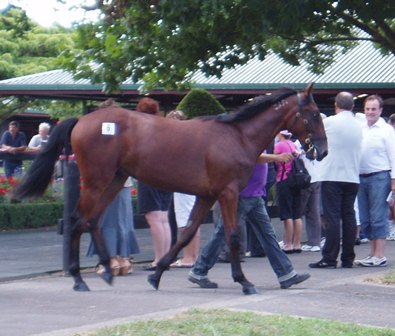
It was almost 2 years ago, Friday 18 February 2011, parade day at the Australasian Classic Yearling Sale, Karaka.

I was leaning on the parade ring fence, watching a few of them stretching  their legs and get used to the place.

And then I saw him.

He didn’t have a lot number on him. I had no idea who he was or what his breeding was. Goofy, big, good natured. Full of character.

I was smitten.

“He’s nice,” I called to the handler. “What lot number?” “Number 6 I think,” was the reply.

In the formal parade, I checked Lot 6 – yes, it was him. Big Is Good. On sale from Croon Bloodstock. Bay Colt, Art Major-Twice As Good.

Big Is Good yearling sale

Big Is Good leaves the parade ring at Karaka’s Australasian Classic Yearling Sale 2011

I watched him walk around again, and made a note in my catalogue: “Lovely, gawky young thing. Tall.” I fell in love all over again. I even took this photo of him. He didn’t make my last cut for my 2011 yearling sales virtual stable, mainly because I thought he would need a lot of time to mature, but I’ve been following him as best I can.

Today, at 1.19pm Big Is Good makes his debut at the races, after showing up well enough in his qualifying trial. I’ll be watching.

Twice As Good’s family is one I hold in high regard. Stunningly consistent, often underrated at the sales, the family keeps throwing up good performers from a wide range of sires.

Twice As Good was a decent racehorse herself and was bred mainly by Steve and Anne Phillips (for Twice As Hot by In The Pocket, Trelise by Holmes Hanover and Waitfornoone by Albert Albert) and then by Robert Death for St Barts by Island Fantasy (one of the few Island Fantasies that really showed big ability), before moving to Croon Bloodstock. She’s then left the good filly Fight Fire With Fire by Artiscape (again, a sire many have struggled with), the Christian Cullen filly Goodlookinggirl who is now owned by Breckon Bloodstock, and more recently the Bettor’s Delight colt Mark Dennis who is showing up nicely. That sort of production record indicates a mare who has a very good genetic structure herself.

The mare to date has left far more fillies than colts, so it must have been with some relief and hope that Big Is Good by Art Major was foaled and aimed at the yearling sales.

But at auction time, few bids were made and he went for a lowly $5000 (although I noted $10,000 on the day, but maybe that was the auctioneer trying to get a bid). Why?

It was announced he was a rig – but does that really count for much if the product is a big strapping Art Major colt?

I think it was more his type – he looked happy, soft, lanky, like a gawky teenager.  Maybe there was something else amiss that I didn’t spot. But now he’s at the races, and in hindsight he was a real bargain.

PGG Wrightson’s Kerry Shaw is one of the owners, with L J Smith, Mrs E A Whitelaw.

I wish them all the best with Big Is Good, the goofy boy who stole my heart.

Note: Just checked on trainer Cran Dalgety’s website for his comments about Big Is Good and a recent photo – and his chances in the race debut today.

Further note: Sat back, loomed up, sat parked, trucked on but got passed by a few. 5th. You wouldn’t be too disappointed with that run unless you’d thrown the house at him – rather than a little one each way bet like me; he’ll be improved with that.

Breeding note: For those interested, check out Australasian 2013 sale Lot 110, a Bettor’s Delight colt from a Artiscape daughter of Twice As Good (and therefore a sister to Fight Fire With Fire). The family’s record is well displayed there.  He’ll probably get a wee bit more than $5000, me thinks!

Read Full Post »

My last couple of blogs have brought some interesting responses sent directly to me rather than posted up.

But let me summarise and also add in some thought-provoking comments from Ken MacKay of Premier Pedigrees (premierpedigrees@gmail.com) who is also the agent for Pepper Tree Farm’s Rock n Roll Heaven, Sportswriter and Roll With Joe this current breeding season, so has an interesting perspective on market trends.

A combination of falling breeding numbers spread among a wide range of sires, plus a large number of breeders going to one proven sire (Bettor’s Delight) is going to have an impact downstream in several ways.

And there are some other trends such as the improved breeding stock (mares and sires) in Australia, which will provide New Zealand with additional challenges in future years.

But as the saying goes, challenges can bring opportunities – in my view, the chance for locally bred sires to shine and to continue the point of difference in our gene pool which has been a strength before and may be again. That’s taking a fairly long-horizon view. The next few years will be a lot trickier!

Comments from blog readers on the ‘saturation’ by Bettor’s Delight, especially in sales yearlings on offer, point out that Woodlands Stud has chosen not to temper demand through pricing, nor has PGG Wrightson taken responsibility for evening things out a bit more at the two top sales days. However you have to remember that these are commercial companies looking after their own interests.

The people that make final decisions are breeders, individually. Perhaps, due to some risk aversion, many breeders have made ‘safe’ choices that are leading us into a bit of a cul de sac if we are not careful. As Ken points out, those studs that are offering top imported/frozen semen sires will not keep offering their product here if the market appears not to want them or too small to give a financial return.

It is not too late for some serious thinking,  collectively and as individuals, to avoid the ironic situation where being ‘risk adverse’ in fact opens us to a greater risk – that we will over-supplied in our own market and cut ourselves out of others.

Following are some of Ken’s observations which I enjoy –  this is thoughtful debate and discussion, with a good dose of passion, which is exactly what we need!

I heard a few breeders say this season that we are “spoilt for choice”. Whilst that may be the case this season, I believe it can disappear just as fast as it came.

Last season Empire Stallions made about a dozen of their stallions available to NZ breeders including the likes of Modern Art, Artistic Fella, Kenneth J, Village Jolt etc, but between them ( excl. Rocknroll Hanover ) they could muster a sum total of 21 mares. This season Ron Burrell could offer only 3 to NZ breeders and he had to fight tooth and nail to make Four Starzzz Shark available again. Talking to Ron the other day he has about 16 bookings to him this season so doesn’t know if he will win that battle again.

I myself tried to get all 5 Pepper Tree stallions available to NZ breeders but couldn’t get Aces N’ Sevens or Always A Virgin  (he currently sits in 2nd place on the New Seasons Sires premiership in N. America behind only Somebeachsomewhere) as there was not enough “margin” given the average cost of semen transport per mare to warrant their availability into NZ.

With poor numbers this season to USA horses of the year in Sportswriter (20) and Roll With Joe ( just over a dozen ) it will be a real struggle convincing the Australian studs that is economically viable to send their semen over the Tasman next season just as Ron will have difficulty with Four Starzzz Shark.

Where does this leave us then other than supporting NZ Studs with home-grown talent? Just as you say “re-invent the colonial”.

With the top end we will be just a nursery for Australian buyers, we hope. Or will they need to come to NZ any more, as they have secured the best bloodlines of our NZ families over the past two decades and now they have direct access to the best N. American stallions?

Problem is the Australian based Studs have now taken the high ground with the top stallions and have upgraded their broodmare gene pool (thanks to NZ ) that the time will soon be here where they don’t need to come over to NZ to buy “superior” stock as APG will be fully meeting that need without the additional expense.

The likes of Emilio Rosati recently buying in Harrisburg sends an alarming message to the NZ breeding industry.

The gulf could just become wider than the Tasman Sea and very quickly too!

There is groundswell speculation that in the near future that those big studs that are left in Australia and NZ will be purchasing mainly local product off the racetracks. Top horse owners are aware of this. The evidence was right there in the 2012 NZ Trotting Cup with 10 of the starters being entires (and this excluded others such as Sir Lincoln). So a move back to “colonial” days in the modern era!!  Who knows but the alarm bells are certainly ringing.

In my next few blogs, I’ll write more on these issues and implications – always happy to have readers post comments directly under here, or to me by email at bee.raglan@xtra.co.nz but please note if you want to be quoted or not on the blog.

I’ll also start looking at some of the interesting lots, from a breeding perspective, at the 2013 New Zealand yearling sales.

It’s great to have just a few extra days holiday to do some researching and writing. We have been exceptionally busy in my ‘normal’ job and it has been a hard year in some ways, with my Mum passing away just a month ago (about the same time as that great mum Rich N Elegant). I do try to blog about once a week, sometimes its more of a cluster then a gap. I do appreciate the positive feedback you send me.

Read Full Post »

It’s a year since I last recapped on how my virtual stable of picks from the 2011 yearling sales were going – very early days for them, at that stage. Now they are 3yos and it is interesting to see how they have shaped up.

My “virtual yearling stable” of four horses from the 2011 sales were:

  • Lot 79 Outlaw (Bettors Delight – Gift of Grace) – sold for $50,000. He qualified and had 3 starts as a 2yo for Cran Dalgety, and so far this season has had another 3 starts as a 3yo for 1 win, and earnings of just $5330. But fingers cross, there may be more to come.
  • Lot 154 Alta Christiano (Christian Cullen – Right This Time) – sold for $50,000. Six starts for4 wins as a 2yo and he looked a very, very nice horse in the making. Sold to Australia for serious money, then injury has ended his 3yo season and I am not sure what the longer term prognosis is yet. Lifetime earnings to date: $72,584.
  • Lot 92 Eye for a Deal (American Ideal – Illmakemyname). Sold for just $10,000. He’s been racing well in Australia, mainly at Albion Park, with 9 starts for 4 wins and 1 place. That’s only earned him $9,567 to date but he may keep stepping up.
  • Lot 179 Sugar Ray Brogden (Grinfromeartoear-Swift Mirage).  Trialled well, then 2 starts for no wins, and it became apparent he had developed a palate issue that needed an operation, which the owner didn’t want to proceed with. So sold as a hack.

Kym Kearns’ picks from that 2011 sale included the nice Mexicano, a Christian Cullen colt who looks to have a bit of class about him; Los Amante who had 3 placings from 7 starts as a 2yo but yet to appear this season; Assassin (sold to Australia, not yet raced); and Isa Smiling the filly trotter that she bred, who has a ton of ability and qualified but yet to learn manners.

Of my 2012 yearling sales virtual stable, understandably nothing has started yet although two of my picks Derringer (now renamed, oddly for a handsome colt, Strawberry Heart) and my own-bred Destination Moon have been noted by their trainers as looking forward 2yos. The other 2 colts I picked were Crixus Brogden (now renamed Real Impulse) and Charlie Chuckles. So I will be keeping my eyes out for those as 2yos – and for the picks that a couple of other blog readers chose.

While the virtual stable is just a fun thing, it does remind me that for breeders and buyers the odds of getting a successful result on the track or financially are a huge challenge.

That’s why it is worth doing the homework to increase the chances of success and minimise the odds of making a real mistake!

Read Full Post »

Ray and Sam have added their selections, so we have three very different and interesting ‘stables’ from the 2012 NZ standardbred yearling sales. Mine are based on appealing types on the day and I haven’t put the same emphasis on ‘go early’ that I did last year. None were top lots, some very cheap! Sam has put heaps of thought into his and done a fair bit of close up inspection as he was in the market as a genuine buyer at the sales. Ray has gone for quality families that have been previously successful. A great mix.

Anyone else want to join in?

Just add your selections with reasons to the Comments on my previous Virtual yearling stable blog.

Read Full Post »

As it turned out, my viewing of the yearlings was more erratic than previous years when I have made a point of viewing all of the parade. This time I saw most of the fillies but missed a large chunk of the colts in the middle section. So my picks are based on those I saw rather than the full catalogue.

I am still struggling to find time to ‘do the numbers’ but my impression was that there were some lovely types of fillies that went for a real bargain.  At the industry forum on the Sunday after the Karaka sales, the issue of keeping up our stock of racing and breeding fillies was well canvassed. John Mooney’s “Chairman’s Corner” in the March issue of Breeding Matters is well worth a read on this and other issues. For vendors of nicely bred fillies from very good sires but not outstandingly bred fillies from the hottest sires, the sale was mainly a pretty tough experience. Some of those breeders won’t be back. It raises alarm bells in terms of the future possibility of being able to pre-select sex of foals. Personally I am totally against this other than in exceptional circumstances (in the same way that I am not in favour of embryo transfer other than in exceptional circumstances).

I digress!

Here are my 4 selections of fillies and colts from the Karaka (Australasian Classic) Yearling Sale, using the pedigree pages and my own amateur observations on the day (no inspections).

Please give me yours! Add as “comment” to this blog.

Lot 122, Kamwood Courage, Courage Under Fire – Kamwood Lass (New York Motoring). Sold $11,000
If I’d had a spare $12,000 hanging around in my pocket I would have loved to take this one home. She stood out for me in the parade ring – not big, but good length of body and a lovely deep chest. She is a very nice speedy type and a full sister to a gelding and a filly who have both done well.

Lot 118,  Schleck, Muscle Mass – Merckx (Dream Vacation) (Sold $28,000)
A lovely athletic looking filly from a family that is full of natural talent. I really enjoy the Paynter approach to breeding, always looking ahead, tapping into European trends and contacts (will do more on this later).

Lot 74, Stolen Secret, Mach Three – Hot Secret (Beach Towel). (Buy back $25,000)
Good size, strong type. Is this a ‘golden cross’? Time and statistics will tell.

Lot 119

Lot 119 Delia with preparer Clare McGowan

Lot 119, Delia, American Ideal – Merrily Merrily (Life Sign). (Sold $7000)
I thought this was a very attractive , tall type, with a long barrel and good chest. She looked in the midst of a bit of growth spurt, but I like what I see of American Ideals on the racetrack and I like the double up of the excellent mare Three Diamonds (3×3) – it is good to see a breeder try something like this rather than the usual focus on double up of sires. I’ll have to check, but my recollection is the American Ideal has had some performers in America from Life Sign mares. Breeder Geoff Elton says he is a little disillusioned with the industry at the moment and has moved into other interests. He has quit this family now, and will probably not be selling at the sales next year. I hope this filly does really well and draws him back in! I won’t expect her to be a 2yo, she’s got growing to do.

The colts I’ve picked are:

Lot 25

Lot 25 Charlie Chuckles

Lot 25, Charlie Chuckles, Grinfromeartoear – Charioteer (Christian Cullen). (Sold $34,000) 
Nice strong type, looked great.  Nice pedigree match too.

Lot 19, Derringer, Bettor’s Delight – Bury My Heart (In The Pocket). (Sold $22,500)
The full brother to Texican but Cran Dalegety didn’t want him and the price is surprisingly light. Without having inspected him, the only downside I could spot was his size – he is a small, compact type, but not the “built like a brick shithouse” round, solid and strong type that Bettor’s Delight can stamp even if they are small. He looked to me more like a smaller In The Pocket type. However the family has plenty of class and I like the breeding – I’ll take my chances.

Lot 175, Crixus Brogden, Real Desire – Swift Mirage (What’s Next) (Sold $9,000)
Sold so cheap I must have missed something!! I’m just taking a punt on this guy because he paraded so well, looked so focused.

Lot 148

Lot 148 Destination Moon

Lot 148, Destination Moon, Grinfromeartoear – Zenterfold (In The Pocket) (Sold $67,000)
Call me biased, but… I’m very happy to have him in my “virtual stable”.

Read Full Post »

I’ll come back to Bettor’s Delight later, because it is a fascinating topic for the future.

But right now, we are bang in the middle of the New Zealand standardbred yearling sales. Day One in Christchurch is over, and I’m adding those selling prices into my catalogue for future reference.

Harnesslink describes the sale so far in fairly favourable terms, with the average only just down on last year. But averages hide many a loss. As I go through the catalogue I can see many yearlings that would not be making a profit for the vendor – or a very marginal one depending on how much of the work you do yourself and how much you have to pay others.

Yes, real quality will always attract interest and money, and there are some prices that indicate there was maybe a fault in the individual that put bidders right off. Which sort of begs the question why some of that isn’t sorted out in the inspections? Well, perhaps it was flagged up and the vendor had realistic expectations going into the sales and few other options.

It is a buyer’s market now, and has been for a few years. On the positive side, these prices leave a bit more for the new owners – a chance to try the horse and maybe get it to the races without over-investing, and a chance to make something if you are lucky. Which is important – because over-inflated yearling prices can be a disaster for the industry if buyers get burned by low stakes and the odds of success.

But I feel for those breeders who don’t have the numbers to average out their income and, like me, are relying on one or only a few horses to provide some sort of return on two years of effort and costs. It is a very nervous time at the sales!

Later today we are heading up to Auckland with our Lot 148 in the float, “Duncan” as we know him. It will be a busy few days. Somewhere along the line I will make time to look at as many of the horses parade or go through the ring as I can, particularly those whose breeding interests me for some reason.

As I said in my blog about selecting a ‘virtual yearling stable’, the sales are a good opportunity to compare and view types of yearlings and what sires are stamping their foals, what types are appealing to the market etc.

In a week or so, I will be posting up my ‘virtual yearling stable’ for 2012, and invite anyone else to pick their four lots too – just list the Lot number, Chch or Karaka, sire and sex as a comment and we can track them over the next couple of years.

Bragging rights: one of my 2011 selections was Alta Christiano, recent winner of the Kindergarten Stakes (making it 2 from 2 after a win in a Young Guns heat). Breeder Tony Dickinson often comes up with a little beauty from families that lack a lot of recent black type. Alta Christiano sold for $50,000 last year, and in the catalogue I noted (at the parade) “walks nice, character”. Well, not a very technical comment I know! But he was one of those yearlings that really catch your eye in the parade ring. I’ll hopefully get some comments from Tony over the next weeks on the breeding side of things.

Read Full Post »

« Newer Posts - Older Posts »