Feeds:
Posts
Comments

Archive for the ‘Standardbred breeding’ Category

I came away from the North Island Standardbred Breeders Forum a bit disappointed, as once again a great opportunity to discuss ideas and move solutions forward took a back seat to presentations on the current state of the industry and a description of the funding model.

The workshops and panel discussion was squeezed in at the end, merged into table-based brainstorming on a list of high level industry-wide topics with an over-moderated panel discussion. Maybe that was so we could finish on time, but the result was much less of a “forum” than was advertised.

I looked around the room at the 50 to 60 guests and saw the range of breeding was well represented, from the big and high end, to those who may have just one or two mares.

So there was a fantastic opportunity to focus in on some specific breeders issues and get some insights and some potential solutions. And perhaps to kick off some specific working groups. To bring people together, rather than just put them in one room.

But that didn’t happen. As each table reported back, there was a real lack of nitty gritty ideas to debate, and a lot more reiteration of what we already know. A table stacked with breeding leaders came up with the fact that “every part of the industry depends on the other parts”. It wasn’t their fault. It was just that the format of the forum didn’t allow them to come up with much else.

I noticed that three tables included specific reference to breeders incentives in their feedback to the wider group, but these were noted and put to one side by chair John Mooney, and instead we had protracted discussion between the panel and John on conditions as a way to deal with the falling number of race horses.

Maybe I had gone in the wrong door, and this was the Owners and Trainers Forum…

On the brighter side, Kiely Buttell kicked off the forum with a report on the profile of breeders and the survey NZSBA did on why those who left are doing so – interesting. Around 60% of breeders are breeding from just one mare, and this is where the industry is declining in terms of breeders stopping participating in breeding. Some of the exiting is through age and death, and many because of rising costs.

“Exit interviews” are well worth doing and can deliver very useful information. However our table later discussed whether those at the 1-mare end of the industry who have left are really those we might be trying to attract back – maybe they come from an era which is no longer applicable, an era of cheaper land, where every farmer had a mare in the back paddock. Do we want those people back? Instead, what has attracted some new breeders to start? And what would help those breeders in the middle range (2-5 mares) stay involved and add to their involvement? Someone from another table mentioned “trying to attract new customers vs rewarding and looking after current customers”. In any business, it is not an “either/or” You need to do both, but you have to get the balance right.

That middle group of breeders (2-5 mares) makes up about 33% of NZ standardbred breeders (19% with 2 mares; 14% with 3-5 mares). It is where hobby enthusiasm and business/financial reality meet, and perhaps where more effort could go into mentoring and finding out what would keep that group alive and well. The breeders of 6+ mares makes up the remaining 7% of NZ breeders. Figures were not available at the forum to show what percentage of mares or foals born each year (and perhaps registered foals) come from each of these groups of breeders, but have been promised.

Dominique Dowding

Dominique Dowding – CEO Alexandra Park and a provocative, interesting speaker at the forum

My attention was grabbed by the presentation by Dominique Dowding, CEO at Alexandra Park. It was well reasoned and provocative, just what we needed more of. She outlined some of the approaches that are taking the Auckland set up into the future. Among her statements I noted: Are higher stakes really the panacea? Stakes at Alexandra Park have increased but still many races are not attracting good numbers of entries. The perception seems to be that Alexandra Park is harder to win at so trainers and owners look for easier options with lower stakes further afield.

You could sense the frustration in her voice!

Dominique also challenged the structure of the industry – “The infrastructure is not correct, and the funding model is not correct.” Therefore any solutions we try may be addressing only the superficial issues rather than the fundamental ones. At Alexandra Park they stopped relying heavily on external funding streams and started focusing on generating their own sustainable income. She summed it up by saying that in many ways harness racing was a professional sport still acting like an amateur.

Her passion for a sound business model to base our industry on is music to my ears. It doesn’t mean we become some sort of soul-less Golden Arches “have-a-nice-day” industry. There are many successful industry models that we could learn from that incorporate both big and small players as producers and consumers – I can think of the New Zealand wine industry as one.

forum

A forum with more focus and more time for sharing ideas and developing possible solutions would be great next time.

I don’t want to knock the organisers. The forum is a neat concept and I would love it to continue, but perhaps in a way that produces some “meatier” exchanges of ideas and has more focus on breeder issues and a plan for moving them forward. Come up with a tighter theme, produce some information in advance, and give more time over to the “forum” side of things, with presentations angled to feed into the discussion in one way or another.

So after all that, did I get any opportunity to raise the ideas about breeders bonuses that I covered in my last 4 or 5 blogs?

No. Only within my table discussion, which was about 30 minutes to cover off about 6 high level topics and try to come up with something we had done no homework on.

However I did say to both John Mooney and Kiely Buttell afterwards that I would be keen to follow up on that breeders bonus issue if it was approached in a consultative and planned way – and that I would like to see others involved to.

So here’s hoping.



Read Full Post »

A year ago I blogged about this, so I won’t repeat myself, but instead ask that you read that blog here.

It refers also to a survey on bonuses that was done by NZSBA, but in my view the options provided were not well described and only one really focused on the ongoing needs of breeders of all horses to have an opportunity of sharing in the success of what they have bred. I know it was just a “toe in the water”, but sometimes that means you are only experiencing the warm shallows rather than the temperature when you really dive into the water.

Bonus

Delighted breeder receives a bonus!


So tomorrow at the North Island Breeders Forum I hope we can discuss what is happening to make significant progress on this score.

Personally I would advocate for developing a discussion paper which investigates the pros and cons of several different options, all of which put a return to breeders (rather than future owners) at the top of the priorities.

I’d like to see the principles I listed in my recent blog incorporated.

People with access to more data are in a better position to assess aspects like predicted numbers and percentages of winners, financial sustainability, etc. And one important criteria I haven’t mentioned so far is that a scheme needs to be national (if not Australasian) rather than deals done with specific clubs, racecourses, types of breeders, or studs.

Then circulate that paper widely, get discussion going, hold specific forums on it, test it out in modelling using the current statistics. Talk to other players who would need to buy-in to each option, e.g. commercial “sponsors” for my previous blog about the “hot points” system.

Set up a representative group that helps with the consultation process and assesses the feedback, and then does further work on a couple of preferred options.

There are people who are passionate and informed about this issue who should be included in the development of options – rather than seen as “sniping from the sidelines”. Be inclusive, be adventurous. Ask for volunteers as well as appointing people who have strong skills needed for this sort of analysis.

If the process takes 12 months but is a good one, then that’s fine by me.

Back to the option of win bonus payments to the original breeder

There are many ways the detail of this can be tweaked, and these need to be thought through carefully:

  • if you registered a mare, you gain discounts for registering her foals. The registration of a mare would be transferable to a new owner.
  • if it was an ongoing bonus for each win, would you make it an annual smaller payment for a registered foal, so breeders have the option to continue or opt out if the horse was not developing well?
  • or would you make it a significant one-off payment for a foal or yearling, and get a one-off bigger bonus payment for the first win only?
  • how would you administer the system in terms of keeping the payment details of breeders up to date? (that is where some kind of annual registration, whether it involves payment or not, becomes useful.)
  • should the bonus be based on percentage of winning stakes or percentage of total stakes, and what sort of percentage? Or should it be a fixed bonus amount for a win, regardless of the level of the stakes or the status of the win? Which option would reward the most breeders and be the fairest?
  • how can the costs of the scheme be shared around, so it is self-sustaining but not an additional burden falling on the party it is meant to assist?
  • what message/s would we want send to breeders?  What are we trying to encourage?

These are the sorts of issues that a half hour workshop at tomorrow’s forum will hardly be able to touch upon.

Which is why I would like to see instead a discussion about the process of moving this forward strongly – a plan for investigation, discussion paper, consultation/feedback, assessment, recommendations, and decision-making – and a process that is inclusive and engaging rather than behind the scenes.


Read Full Post »

I don’t have the access to databases or time to develop detailed scenarios, I’m just trying to make a contribution in evenings and weekends after my day job and helping look after my horses like all of us. So what I can paint is a picture of an option or two that might be worth following up. It’s not perfect but I am trying to stimulate debate and open up ideas for discussion.

I’m keen to look at positive futures for breeders. I’m putting my hand up for that. Are you?

Come on, we need to get some momentum to support our NZ Standardbred Association by coming up with really interesting ideas for them to take forward, and taking a real interest in what they are doing.

See you on Sunday at the forum at Alexandra Park = yes!! (Although I can find no reference on the NZSBA website to this forum or the agenda – frustrating as I would love to link to the details but what I’ve got by email I’m sharing at the end of this blog – I am sure you could turn up if not a member already but wanting to join.)

Horse breeder rewards

How can we reward standardbred breeders fairly? Over time, and on performance.

Option 1

This idea is a Breeders Credits Reward system along the lines of many commercial schemes operating at the moment outside our own industry which try to attract loyalty. For me, as a customer, one of the best is the Westpac Hot Points programme, but for others it might be a retail loyalty card, or perhaps Air NZ Airpoints. The wider principle is the same, it allows you to build up credits against your expenditure and cash them in for a range of products and services from a variety of suppliers.

The obvious difference is that our harness breeders scheme would be based on credits accumulated through earnings – wins and or placings for each horse bred (and nominated for the scheme) by a breeder. Whether that is on numbers of wins or stakes earned, I’m not sure, but my gut feeling in terms of industry development and growing new breeders/runners is to reward on number of wins (and perhaps placings although that dilutes the reward) rather the rewards based on stakes earnings. Why? Because a tiny number of big stakes races often add huge earnings to so few race horses, and therefore the breeders are not recognised for their role in providing good winners in the daily racing across the board. That’s what keeps the industry going. Spread the rewards, grow the pool!

This sort of breeders scheme is going to need some financial input from breeders to set up the pool. So I suggest an entry payment  of some sort (but what should be debated e.g. is whether that is annually renewing fee or one off, and whether it is per horse, per mare, annual or all up etc.) The Breeders Crown system has set some good precedents. But the main thing is to keep it easy for breeders to get into, not a high cost/high risk subsidising payment for someone else who will get the rewards downstream.

The advantage of this type of system is that is that it can leverage off a wide range of sponsors for “vouchers” which the credits can buy, and that will open up some good sponsorship deals. For example, your NZ Harness Racing Breeders Credits might help pay for a service fee you otherwise couldn’t afford; or you could spend it at a feed store on a particular type of feed sacks; or with an equine dentist for so many hours of work; or an equine shop; or equine transport credits etc. So it does give opportunities for deals to be struck with industry participants – and that might even be the TAB offering cash conversion to your TAB account. But whatever, it is a reward that goes back to the breeder and empowers them to use it is the way the suits their circumstances. That’s the real advantage of this option!

Another real advantage is that credits could be transferable to another owner if the breeder made that choice. Harder to administer, but it might provide a good selling point for mares and progeny if they are paid up and have got credits in the bank.

A key would be that credits would not be able to be “cashed up”.

Next time I cover off Option 2.

– Bee

North Island Breeders’ Forum

Sunday 8th March – Alexandra ParkNZSBA in association with the North Island Breeders’ are pleased to confirm that the North Island Breeders’ Forum will be taking place on
Sunday 8th March at Alexandra Park,  9am – 1pm.
We have received a good response from breeders and have an interesting timetable – with plenty of time for you to have your say. If you haven’t registered already, please reply to this email and confirm your attendance. Forum Timetable9am                   Morning Tea/Mix and Mingle
9.30am              John Mooney to open and presentation by NZSBA;
10am                 Dominique Dowding and Kevin Smith, Alexandra Park;
10.30am            Edward Rennell, Harness Racing New Zealand;
11am                 Workshop – focused on solutions for industry issues and new ideas;
11.30am            Breeding/Industry panel to answer your questions.If you have any comments/questions that you would like to raise anonymously, please feel free to complete this form and we will ask the question on your behalf. If you are not going to attend the meeting and would like specific feedback on your question, please fill in your contact details.This will be a great opportunity for breeders to voice their opinions and collaborate for the betterment of the industry.

Kind regards

Kiely

Read Full Post »

We talk about breeder’s bonuses or options to give more back to breeders, but there is no structure to the discussion.

We’ve had an online survey (toe in the water) and brief moments at forums, but I don’t see a real effort to engage with breeders in an open discussion on some of the options that are being used world-wide or might be local programmes that work here.

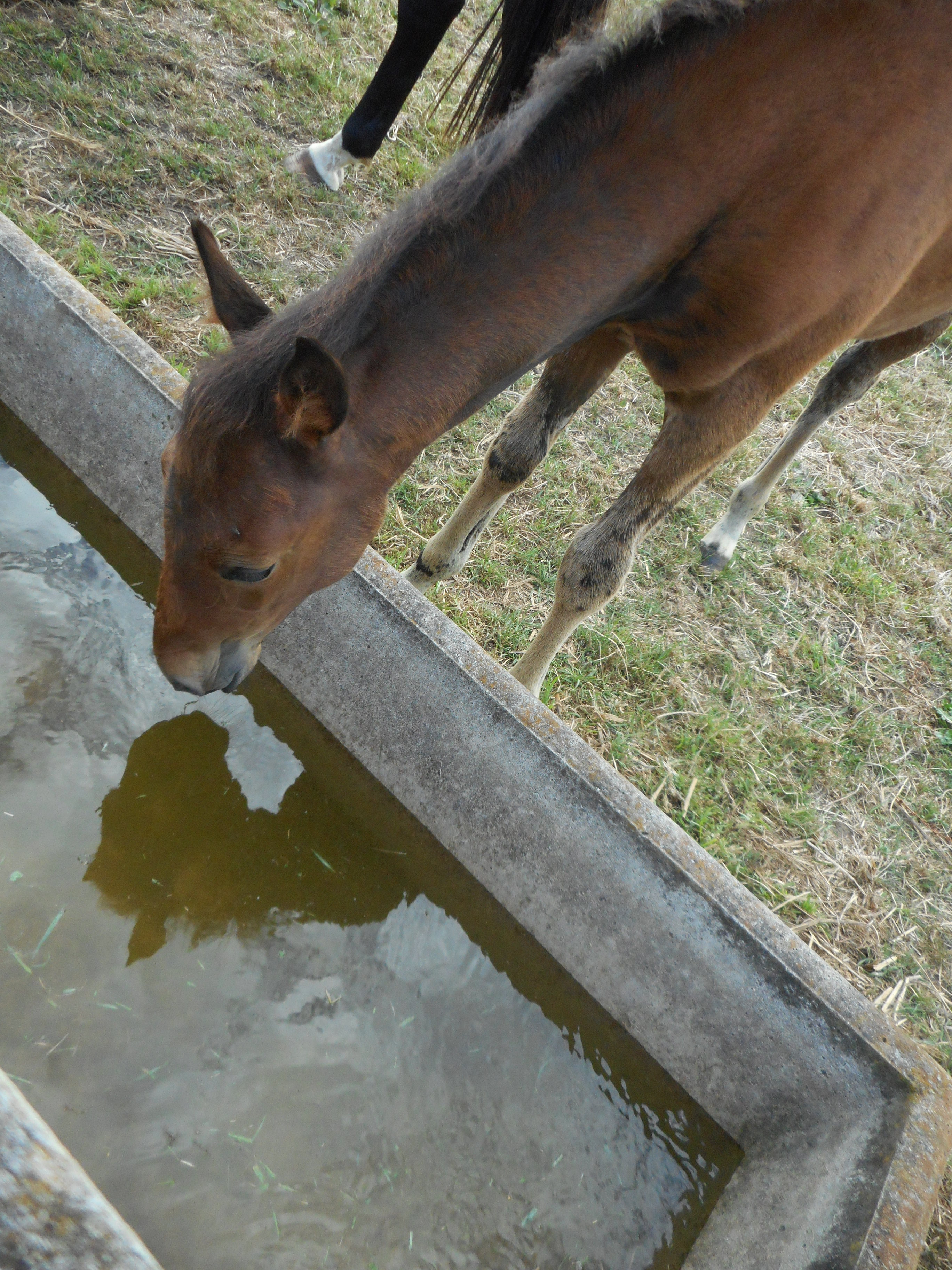
Foal reflecting

Reflecting on breeders’ rewards and recognition options

When I go up to Auckland this Sunday for the Breeders Forum, I hope we get some specific feedback into what our representatives are aiming for and what the alternatives might be for our consideration. One-off achievements with specific clubs or sponsors are brilliant, but they don’t give a cohesive response to the NZ breeder’s problem.

We need an industry-wide solution.

I want some options that build on what we know (globally), that asks questions, and provides robust opportunities to discuss answers.

So to put some ideas into the circle….

Here’s my thoughts, following on from the last few blogs I posted on this topic:

The principles need to be:

  • There needs to be some effort to look into the actual costs (variable between locations) of breeding and raising a horse, so we all have a sense of range of costs that a “raw material” producer could expect to outlay in this industry. Hidden costs are just submerging this issue in a sort of invisible breeder’s donation/hobby account. For example, gaining younger newcomers to the industry may be increasingly dependent on them having access to land, which is a huge ask in today’s real estate market. Their scenario is quite different from the older farmer with 500 acres and a hobby interest.
  • Any reward must be based on outcome (performance) to avoid skewing the breeding market to a poor quality product just to increase foals on the ground.
  • Programmes that have addressed a similar need for other players in the industry can often be a good, affordable, sustainable and fair “role model” if they work well.
  • Those who benefit need to make a contribution e.g buy in to a programme; but also need to see how that benefits them.
  • The return to breeders needs to be meaningful but viewed as a bonus rather than compensation of costs.
  • We need to associate this with an accurate database of breeders, and thanks to HRNZ’s incredible system that should not be a major issue, but it does need to be workable and also within a system such as the Sires Stakes administration unit which can provide the formalising of a scheme.
  • There are commercial incentive and reward options outside our industry which might also be worth looking at as a template, including the successful “Westpac Hot Points” scheme based on gaining expenditure credits, but this could be modified to performance credits.
  • Any rewards/recognition programme needs to have the ability to “tweak” to give signals to breeders about favoured long term directions. I don’t mean short-term things like “Breed to this sire this year and get more bonuses” but rather helping to offset trends away from breeding fillies, or encouraging a wider spread of sires. Yes, that is controversial because people like to say that the market takes care of those things. But the “market” doesn’t exist in any pure sense and certainly not with any long term development bias (compared to short term financial gain). So let’s get real.
  • If possible, given the Australasian market we have, it needs to work around the fact that many New Zealand horses bred perform in Australia not here, and these are some of the breeders who are currently losing out on the success of the horse.
  • Finally the scheme needs to be inclusive (but voluntary to avoid any of the issues we have had previously with imposed schemes). So no-one is excluded, and it is not just an additional bonus for those who already succeed at the top end. For this reason I favour a system based on number of wins (for example) rather than stake-money earned by a horse.

OK, those are my principles.

You can probably see the direction I am going in, but I will explain a bit more next time.


Read Full Post »

Just a few interesting asides before I get back to the breeders’ bonus concept…

  • The Tintin In America filly who won the South Australian Kindergarten heat (his first winner) went on to win the Kindergarten final on Friday at Globe Derby. Not a huge race – just a $15,000 purse, but Just Wantano looks to be a tractable type with a bit of flair. Here’s my earlier blog about her first win. Worth checking out the race video of the final too, which is on the South Australian Harness Racing site (Globe Derby, 27 February, Race 6).
  • Talking of new sires trying to get into the market, there’s a good article on Harnesslink about Panpacificflight showing up well from limited opportunities. I’ve done a couple of blogs specifically on this sire, and others that mention his family. Just use the search function on my blogsite and put in Panspacificflight to find them all. The main blog was about his yearlings sold at the 2014 sale in Christchurch.
  • Looks like Lis Mara is heading back home for good. Harness Racing Update recently did an interview with Mike Gulotta, the owner of Deo Volente Farms in Flemington, NJ:

HRU: You recently added Lis Mara to your group of stallions. He was a terrific race horse when you were among his co-owners but has had mixed success as a stallion. How much of your decision to bring him home was due to sentimentality?

MG: I think he can do well as a stallion. I do what’s best for the horses in every case. If you do what is best for the horse you’ll be successful. There was some element of sentiment involved but the horse was a tremendous race horse for us. In his own right he has four sons who have been under 1:50, including Mel Mara. who has made almost $500,000. The horse has got a tremendous pedigree and at some point he is going to produce a number of horses that follow in his footsteps. But you’re right. It was partly because I didn’t want him to be relegated to the backwoods of Central Australia and not know where he was, not after what he did for racing and for us and for the other owners. So I thought this would be a good opportunity to bring him back.

  • Chucaro Acero BC, the Shadow Play pacer from Argentina, raced in appalling sleet conditions at Meadowlands on 21 February – the rest of the meeting was cancelled immediately after the race – and got a creditable 4th. He was not outclassed and will be interesting to follow him.
  • Destination Moon, my Grinfromeartoear half brother to Tintin In America has also been racing again in America. He had a great start last season with three good wins in a row, but then almost three lasts in a row – the form turnaround looked partly to do with horror draws and also faster fields. It may well have been the big move to America catching up with him too, as it can take a horse quite a while to adjust. Luckily, his connections sent him out for a break. They are starting him off slowly again in easier races this season. He raced today at Freehold and won well in his first tote race for the season. Although at 1.57 it was a lot slower than his best time of 1.52, it will do his confidence the world of good.

Read Full Post »

In my last blog I raised the issue of getting a fair return for breeders – the people who take high risks to produce their product (a racehorse) which goes on to be an integral part of the wider industry product (a race on which betting can take place).

What is a fair slice of the pie for breeders of successful racehorses?

What is a fair slice of the pie for breeders of successful racehorses?

Other major players in the production line charge for their time and expenses – a recognition of the resources that go into a performing horse regardless of whether it wins or comes last. For example, drivers have a set fee for each drive no matter where the horse gets in the field, currently at $75 +gst I think. And trainers have their daily rate for training charged to owners, plus other costs like gear and track fees, vitamins, worming, transporting etc which are also reimbursed. Then on top of that, both trainers and drivers receive a bonus each time the horse performs well in a race. This bonus is a part incentive and part reward. The trainer receives 10% of the stake money payable to the owner, and the driver 5%.  That’s all good and I have no argument with it.

All I ask is that a small percentage is also tagged for the person who started it all in the first place – the breeder. Currently, their need for a return on investment is recognised only once, when (and if) a sale takes place to the first owner. Or possibly over a long time as the mare builds a reputation – although having good siblings is no guarantee that a particular yearling will sell for a reasonable price. Often, the return to the breeder will hardly cover costs. If the horse goes on to be successful, there is no bonus for the breeder.

How can breeders get a fairer slice of the pie?

It is tempting to say, as some do, that increasing the overall stakes will give a bigger return to breeders because so many breeders are also owners.

I have two main objections to that:

  1. It makes the breeder role invisible once again, just when we are starting to get some traction into the specific needs and interests of breeders in their own right. It takes away a clear separation between different roles. Many trainers are also owners in a horse, so why not merge them into common “owners” group as well and take away the trainer bonus? And what about the drivers who are also trainers and part owners, like Mark and Natalie – maybe they want to give up their drivers and trainers percentage bonuses in exchange for bigger owner returns? I doubt it…
  2. It ignores the fact that many breeders may be owners of horses not by design but by necessity because an young untried young horse is damn hard to sell. For many smaller breeders, an early sale is unlikely to cover their most basic service fee and raising costs. Breeders often end up carrying their foals for another year or so until they get to a point where they are able to be trialled for racing – and then sold, if lucky. In the past, carrying that cost was easier as there was more access to cheaper land. That is no longer the case.

What is an alternative?

We all contribute to the end result.

We all contribute to the end result.

A breeders bonus, but

  • one that rewards the original breeders of racehorses rather than those who buy a mare.
  • one that is tagged to performance.
  • one that is partly self-funding and partly a fair payment by the industry to those who produce the raw material of our industry success stories.
  • one that can be tweaked as necessary to encourage desirable breeding trends.

Next blog, I look at how it could work.


Read Full Post »

So where do breeders go to get a return on their investment?

How do breeders react to the current choices for the future?

How do breeders react to the current choices for the future?

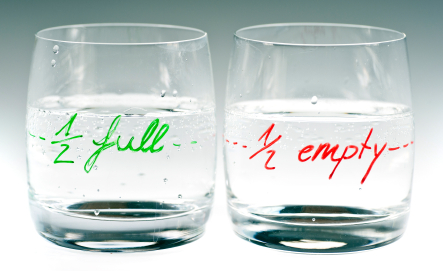
If you are a glass half empty person, you might say: “Into the same corner where a lot of other breeders have gone.”

If you are a glass half full person, you might say: “Forward, to a better place.”

I’m a positive person, so I will opt for the latter. But to do that, I need to ignore some signals from the “market” which tell me that breeding is such a high risk industry with such a small conservative market (at any age or ability of your horse) that it is not a viable option to even cover your real costs. Unless you do exactly this, and exactly that. And then cross your fingers.

Are we really going to attract new breeders into this situation?

Personally, I have taken risks and been lucky, but many have not had the same rewards. And I feel for them. It could well be me next time. It has been in the past.

The issue is this: the commercial and hobby side of breeding need more positive and consistent signals from the industry to keep going.

If the signals are as short-term and limited as: “Breed your best mare to Bettor’s Delight or Art Major” – then I am out of here. Because that is a blinkers on and ear plugs in, and we are steering into a corner.

Industry signals need to be medium term and consistent. Breeders are in it for a long haul. Decisions we make take effect 2 or 3 years later, or more.

But the current signals (e.g. market prices) are impossible to meet without the whole production line narrowing to short-term output. These sires. These families. These types. Tick the box.

Innovation and commercial development has never originated from such a narrow perspective. Merely fulfilling the current market is not enough for a product like ours that develops over time and often from outside the square.

Most successful industries look to grow their product and diversify their markets and risks. Those that take high risks get high rewards.

So why are we moving in the opposite direction?

And why are we treating many “hobby” breeders as donors to our overall industry, letting them take the loss, year after year, of finding and developing the product that will take us into the future?

Would any other viable industry work this way? Are many breeders falling into a local Trade Aid category? Or is there a role for an R&D development fund that supports breeders who are willing to risk their personal investment in finding new and exciting directions?

Well, I’m asking the questions at least.

I will look into this in more detail before the Breeders Assn forum in Auckland in March. Hopefully this will help stimulate some good debate about core issues.

“Floating ideas – some people say it is just hot air in a balloon. But if you are drowning in a river, that balloon might be worth grasping.”

(quote from Bee Pears lol)


Read Full Post »

First some information for those blog readers who are not from New Zealand or Australia: Changeover is a NZ bred horse (In The Pocket x Chaangerr) who was an outstanding racehorse winning from 2yo through to 6yo at the highest level and showing all the speed, courage and stamina you could wish for. He ended his racing career with the statistics of 66 starts for 29 wins and $2.4 million in the bank. And as an entire, he retired to stud.

Changeover, pacing sire

Changeover, pacing sire

He has been well received by New Zealand and by many Australian breeders. In New Zealand he served 226 mares in his first year (for a slightly disappointing 160 live foals born in 2011), 137  in his second year for 99 live foals in 2012, 113 in his third year for 89 live foals in 2013, and 142 for 100 live foals born in 2014  – and it seems he has had about the same number of mares served in the last season. He has had over 100 Australian bred foals as well.

How is he turning out?

In my view, he is already proving himself as one of those horses who will translate the qualities they had on the track into the breeding barn with a very, very solid performance as a sire to date, from only a few crops (oldest are 3yos).

His NZ bred progeny (raced here or in Australia) are looking good (see list of winners below).

Currently his 3yos (142 registered) have 80 qualifiers, 46 starters and 25 winners (interestingly 4 from Presidential Ball mares and 5 from Live Or Die mares). Of his 88 registered 2yos, 7 have qualified so far this season and 1 is a winner.

We know that Changeover was a super younger horse, but a scopey type who got better and better as he matured. So the signs for these youngsters is positive. It is a good start, and more will come from each crop as they develop.

Which is why I wonder how much it takes for our great home-bred sires to make a really important in-road into the commercial end of the market, especially at yearling sales time. We take a huge discount for “local” and then for “may need time” types.

Changeover (and others) cannot be pidgeon-holed in such a simplistic fashion – he was a versatile racehorse, and appears to be a versatile sire.

However once again this year there were some real Changeover bargains to be had at the yearling sales. And unfortunately “bargain” is another way of saying the vendor got below cost return. Which is not great for any industry that wants to create a viable product stream. But more on that in a blog soon…

The average price of Changeover yearlings sold at the two New Zealand yearling sales – (the Australasian (Karaka) and Premier (Christchurch) – this year was just over $12,000, with 3 not sold and 2 withdrawn.

But check out how his statistics look when you examine his winners to date. There is a sense of quality about their wins and their ratios of starts to placings. While obviously not all his progeny will turn out to be winners, the odds are looking good for Changeover as a solid punt for buyers rather than an outside bet. However his prices are yet to reflect that.

Here is a current (24 February 2015) snapshot of his NZ bred winners (raced here or in Australia):

Remember that these are just starting out on their racing careers…

  • Beaudienne Bill 19 starts, 6 wins, 2 places $34,485
  • Big Spending Telf 7 starts, 4 wins, 2 places $23,598
  • Cambio 1 start, 1 win $13,377
  • Carisma 9 starts, 2 wins, 1 place $11,686
  • Change The Rulz 12 starts, 2 wins, 4 places $13,282
  • Controversial 12 starts, 3 wins, 1 place $20,145
  • Cool Changes 2 starts, 1 win $6652
  • Envious 1 start, 1 win $3060
  • Hvar 5 starts, 1 win, 1 place $4475
  • Itsallovernow 10 starts, 1 win, 1 place $7762
  • Lennox 11 starts, 5 wins, 3 places $26,041
  • Lola Jackson 2 starts, 1 win, 1 place $5675
  • Midnight Rider 10 starts, 1 win $7097
  • Nuala 3 starts, 3 wins $41,735
  • Onedin Onyx 7 starts, 2 wins, 1 place $12,408
  • Oneover 16 starts, 3 wins, 7 places $39,423
  • Prince Of pops 16 starts, 4 wins, 5 places $40,317
  • Risk 4 starts, 1 win $3782
  • Spare Change 8 starts, 1 win, 4 places $6824
  • Sudden Change 10 starts, 2 wins, 4 places $10,621
  • Spendthelot 6 starts, 1 win $6793
  • The Charging Moa 5 starts, 1 win $3683
  • Webb Ellis 11 starts, 2 wins, 3 places $13,425
  • Whitershadeofpale 7 starts, 4 wins, 1 place $22,775


Check out my blog from last year about Changeover at the sales

Read Full Post »

Last November I flagged up to blog followers the successful Shadow Play horse racing in Argentina – and indeed the fact that there was harness racing in Argentina at all!!

Well, the horse – Chucaro Acero BC –  is coming to Meadowlands to race tomorrow.

I’m not fussed about the results, just love the fact that we have an international industry and some countries coming in from left field.

A bit like the Cricket World Cup (currently  in New Zealand, gorgeous weather, great pitches, fantastic matches unless you are from England) with the standardbred “minnows” like Argentina still able to try to rattle the big guns, and learn from the experience.

And yes, I do like Shadow Play as a sire that can give depth to our pedigrees. I am a little tired of the focus on such a limited sire pool at the top end of the market.

You can find out more about Chucaro Acero BC on harnessracingupdate.com – their newsletter is always a breath of fresh air and easy to read.

Read Full Post »

I’m flat tack at my day job, folks, and haven’t been to the Christchurch sales.

From what I see of the results, it seems to be a bit of a roller coaster. Demand yes, but so focused that breeders are getting a “50 Shades of Neigh” workout for anything that goes outside the parameters that owners and therefore trainers want. Some lovely bargains for those willing to shop around. Pleasure for some, pain for many.

And a lot of vendors opting not to give their horses away.

Give me the weekend and I will post a blog after I see all the results. Quite different from the Karaka sale, whatever the spin doctors say.

Of the lots I highlighted in the Premier sale for a range of reasons (outside the “market” considerations):

  • Patrick – good on you for selling Standing Bear (Lot 268) for $15,000. A lovely looking yearling by The Pres.
  • Lot 147 Fiscal Madness, from a Love You mare by Revenue, sold for just $7.500. Maybe he had a leg missing?
  • Lot 456 was Joe Louis that I featured because of his lovely outcrossing pedigree. Not that it means tickey boo to the buyers, although he did sell for $22,000.
  • And Lot 201 was a foal called That’s The Story by mare Bree from Monarchy. He didn’t meet the reserve of $25,000.

Do these results reflect the outcome for those yearlings? Their quality? No.

We will follow them and see what happens.

But again, the current market results in the breeder taking huge risks, often not recognised at the time.

If the odds turn out in the breeder’s favour – if the horse turns into a winner – I would love to see that breeder rewarded.

At the moment, breeders are carrying an unfair burden of developing our breed. Let’s hope the upcoming Breeders Forum in Auckland in early March starts really opening up the conversation around this issue.

While the Auckland sale left me with a bit of a buzz, the Christchurch sale appears at first sight to be a bit of a fizz overall, although some good results for some lots would cover the risk for some bigger breeders.

Read Full Post »

« Newer Posts - Older Posts »